
Three questions we hear constantly: “Is this just ChatGPT for pricing?” “Does ‘agentic’ mean it prices autonomously without human input?” “How is this different from the AI pricing tool we already use?”
Let’s clear up the confusion.
The term “agentic AI” is everywhere right now, and like most buzzwords in tech, it’s being used to describe everything from simple chatbots to genuinely sophisticated systems. For pricing managers trying to separate signal from noise, that’s frustrating.
Here’s what agentic pricing actually is, and what it definitely isn’t.
FAQ 1: Is agentic pricing just a chatbot interface?
Short answer: No. The natural language interface is a feature, not an innovation.
What chatbots do:
Chatbots execute commands and surface information. You ask, “Show me competitor prices,” and it displays a chart. It’s a different way to access the same data you’d get from clicking through dashboards.
What agentic systems do:
They analyze context, recognize patterns across thousands of variables, and recommend strategies with complete rationale.
The real difference:
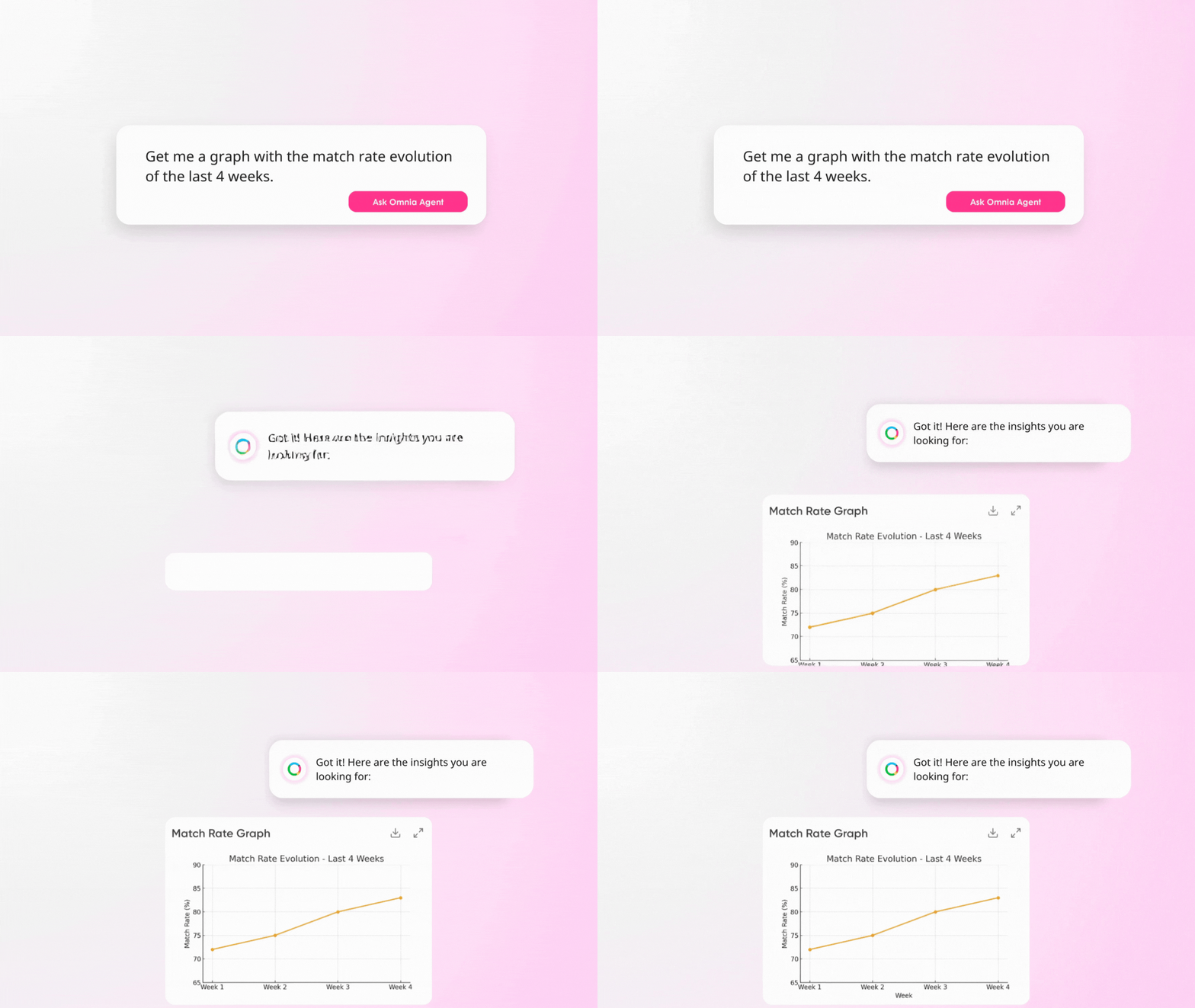
Let’s say you ask: “Why did our match rate drop in electronics last week?”
A chatbot response:
Shows you a graph of match rate decline over time. Maybe highlight which day it dropped most significantly. That’s it. You still need to:
- Export competitor price data
- Cross-reference with your pricing
- Manually identify which competitors moved
- Figure out if it’s temporary or strategic
- Build your own analysis of what to do
An agentic system response:
“Your electronics match rate dropped 5.2% last week, primarily driven by Competitor A reducing prices on 23 SKUs by an average of 12% on Tuesday. Analysis of their inventory indicators suggests this is likely clearance pricing (stock levels 40% below normal), not strategic repositioning. The affected SKUs represent $47K in weekly revenue for you. 15 of these SKUs are in segments where you typically compete on value; 8 are in premium segments where you maintain differentiation. Recommended action: Respond to the 15 value-positioned SKUs with 8% reduction (expected margin impact: -2.3%, expected volume lift: 18-22%). Monitor the premium segment for 48 hours before responding. Confidence: High (based on 47 similar patterns from this competitor).”
See the difference? The interface (natural language) is the same. The intelligence is completely different.
The chatbot gives you data. The agentic system gives you analysis, context, and strategic recommendations.
FAQ 2: Does “agentic” mean it makes pricing decisions autonomously?
This is the fear behind every demo: “Will it just start changing prices without asking us?”
The short answer: No. “Agentic” means analytical partner, not autonomous decision-maker.
Understanding “agency” in this context:
The term “agentic” comes from the AI’s ability to act with agency, meaning it can analyze situations, understand context, and recommend actions. But “can recommend” doesn’t mean “automatically executes.”
Think of it like having a pricing analyst who:
- Works 24/7, monitoring market conditions
- Processes thousands of data points simultaneously
- Recognizes patterns you’d never spot manually
- Comes to you with recommendations and a complete rationale
That analyst has “agency” to analyze and recommend. They don’t have the authority to execute without your approval.
How control actually works:
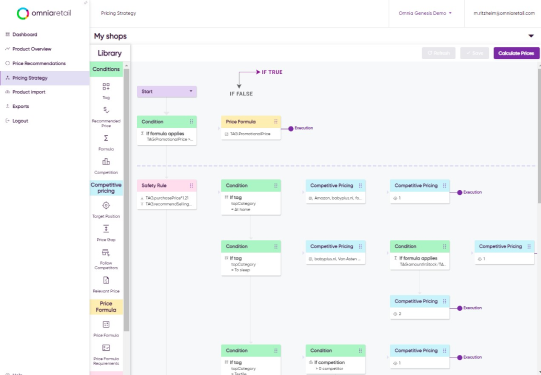
Every pricing recommendation requires your approval unless you specifically configure auto-execution rules. And even then, you set the boundaries:
- Maximum price change limits (e.g., “never change prices more than 10% without approval”)
- Margin floor thresholds (e.g., “never drop below 25% margin”)
- Category-specific rules (e.g., “auto-execute in accessories, require approval in flagship products”)
- Competitive positioning guardrails (e.g., “maintain premium in these categories”)
The reality of implementation:
Most retailers run agentic systems in “recommendation mode” for months before enabling any auto-execution. You review recommendations, approve or override them, and build trust in the system’s logic.
Over time, as patterns prove accurate, you might enable auto-execution for routine decisions (like matching competitor prices within pre-set boundaries) while maintaining manual review for strategic moves.
You’re not giving up control. You’re deciding which decisions need your strategic judgment and which can be handled systematically.
FAQ 3: We already have “AI pricing.” How is this different?
This is where the confusion gets real, because vendors have called everything “AI pricing” for years.
The honest truth about most “AI pricing” tools:
They’re rule-based automation that executes faster. The “AI” is often just:
- Machine learning for demand forecasting
- Algorithms that apply your rules automatically
- Faster processing of large datasets
That’s valuable. But it’s not agentic.
The comparison:
Rule-based AI pricing says: “If X happens, do Y.”
- If competitor drops price 10%, match within 5%
- If inventory exceeds 60 days, reduce price 15%
- If demand increases 20%, raise price 8%
Agentic pricing says: “X happened because of factors A, B, and C. Here are three options with trade-offs for each.”
Real scenario to illustrate:
Competitor drops their price 15% on a key product.
Traditional AI pricing:
- Triggers rule: “If competitor drops >10%, match within 5%.”
- Automatically reduces your price 10%
- Done
Agentic pricing:
- Analyzes: Is this clearance (check inventory signals) or strategic repositioning?
- Checks: What’s your margin constraint on this product?
- Considers: Which customer segments buy this product, and how price-sensitive are they?
- Evaluates: What happened the last 6 times this competitor made similar moves?
- Recommends: "This appears to be inventory clearance (their stock is 30% below normal). Based on your margin requirements and historical patterns, three options:
- Match at 10% reduction (margin impact: -3.2%, expected volume lift: 15-18%)
- Partial response at 6% reduction (margin impact: -1.8%, expected volume lift: 8-11%)
- Monitor for 48 hours (risk: potential market share loss, benefit: preserve margin if this is temporary)
The rule-based system executed. The agentic system thought.
FAQ 4: Is this the same as “machine learning pricing”?
Machine learning is a component of agentic pricing, not the full picture.
What ML handles:
- Pattern recognition across historical data
- Demand forecasting based on trends
- Price elasticity estimation
- Identifying correlations between variables
What ML doesn’t handle alone:
- Understanding business context (“we’re repositioning this brand premium”)
- Communicating insights in natural language
- Explaining recommendations with a transparent rationale
- Incorporating strategic constraints (margin floors, positioning goals)
The complete picture:
Agentic pricing combines:
- Machine learning for pattern recognition and forecasting
- Natural language processing for conversational interaction
- Contextual reasoning for understanding the “why” behind data
- Transparent decision logic for explainable recommendations
ML is the engine. But agentic systems add the transmission, steering wheel, and dashboard that make that engine usable for strategic decision-making.
What Agentic Pricing Actually Is: A Quick Reference
✅ What it is:
- Analytical partner that understands pricing context
- Pattern recognition across thousands of variables simultaneously
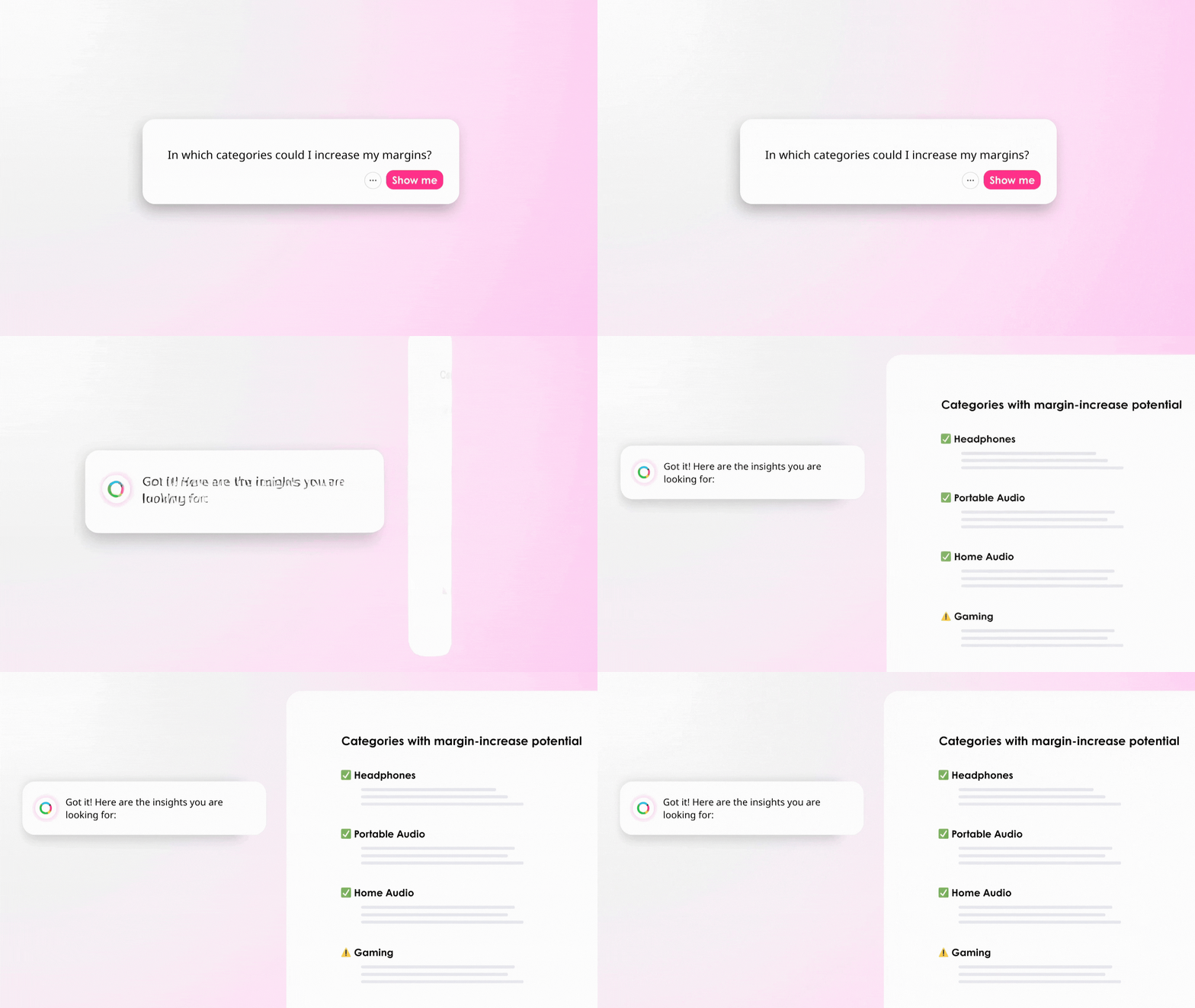
- Natural language interface for instant insights (“Why did sporting goods underperform?”)
- Transparent recommendations with a complete rationale, you approve or override
- A system that gets smarter as it learns from your decisions and market outcomes
❌ What it isn’t:
- Chatbot that just shows existing data in a new interface
- Autonomous system that changes prices without human input
- Simple automation running your existing rules faster
- Black-box algorithm that can’t explain its logic
- Replacement for human strategic judgment
The Evolution That Got Us Here
Understanding where agentic pricing fits in the evolution helps clarify what makes it different:
Phase 1: Manual pricing (pre-2010)
- Spreadsheets and gut instinct
- Pricing managers manually tracking competitors
- Updates weekly or monthly
Phase 2: Rule-based automation (2010-2020)
- “If/then” logic that executes automatically
- Daily or weekly repricing cycles
- Faster execution, but still static rules
Phase 3: AI-enhanced pricing (2018-2024)
- Machine learning for demand forecasting
- Automated rule optimization
- Faster and smarter execution
Phase 4: Agentic pricing (2024+)
- Contextual understanding, not just execution
- Conversational intelligence
- Transparent reasoning
- Proactive recommendations based on pattern recognition
Each phase built on the previous one. Agentic pricing isn’t replacing rule-based systems; it’s adding a layer of intelligence that wasn’t possible before.
Why the Confusion Exists
The term “agentic AI” only became mainstream in 2024. Before that, vendors called everything “AI” or “machine learning” or “intelligent pricing.”
Now “agentic” is the new buzzword, and predictably, it’s being applied to systems that aren’t actually agentic.
How to tell the difference:
Ask these questions about any “agentic” pricing system:
- Can it explain why it recommends a price change? (Not just “the algorithm says so,” but actual data sources, logic, and context)
- Can you ask questions in natural language and get comprehensive answers? (Not just pulling up a dashboard, but actual analysis)
- Does it recognize patterns across multiple dimensions? (Customer segments, competitor behaviors, seasonal trends, all simultaneously)
- Can it provide multiple options with trade-offs? (Not just one recommendation, but strategic alternatives)
- Does it learn from your overrides? (When you reject recommendations, does it understand why and adjust?)
If the answer to all five is yes, it’s genuinely agentic. If not, it might be good software, but it’s not agentic pricing.
The Bottom Line
Agentic pricing represents a fundamental shift from execution to intelligence.
Your traditional pricing tools execute rules. Your new “AI pricing” tools execute rules faster and with better forecasting. Agentic pricing actually understands context, recognizes patterns, and thinks strategically.
The natural language interface is convenient. But the real innovation is the analytical intelligence underneath it.
Is your pricing system just showing you data in a new format? Or is it actually helping you understand what that data means and what you should do about it?
That’s the difference between a chatbot and an agentic system.