Traditional price monitoring tools were built around dashboards. Pricing managers would log in, filter competitor data, export reports, and manually interpret what was happening in the market. While these dashboards provided useful information, they also created a significant operational burden for pricing teams. In many organizations, analysts spend hours navigating charts, exporting spreadsheets, and comparing datasets before identifying a meaningful insight.
This approach becomes increasingly difficult to scale as assortments grow and competitors multiply. Retailers often monitor thousands of products across dozens of competitors and marketplaces. Manually analyzing this volume of pricing data slows down decision-making and makes it difficult to respond quickly to market changes.
The newest generation of AI price comparison tools fundamentally changes this workflow. Instead of forcing users to explore dashboards and manually interpret charts, modern platforms introduce conversational AI interfaces. These systems allow pricing teams to interact with market data directly by asking questions in natural language.
This shift is part of the broader evolution toward agentic pricing. Rather than acting as passive reporting tools, modern pricing platforms behave like intelligent assistants that analyze data, identify patterns, and explain what is happening in the market.
Within the Omnia platform, this capability is powered by the Omnia Agent. Instead of manually exploring dashboards, pricing managers can simply ask questions about competitor pricing, category trends, or price positioning. The system retrieves the relevant data, performs the analysis, and presents the results with clear explanations. This dramatically reduces the time required to identify pricing insights and allows teams to focus on strategy and decision-making rather than data extraction.
Traditional Price Monitoring vs AI Price Comparison Tools
Not all price monitoring tools are built the same. Traditional price monitoring software was designed primarily to collect competitor prices and display them in dashboards. While this approach provides visibility into the market, it still requires pricing teams to manually analyze the data, interpret competitor movements, and decide how to respond.
Modern AI price monitoring software takes this a step further. Instead of simply displaying competitor prices, it combines real-time market data with analytics, pricing rules, and conversational AI capabilities. Platforms like Omnia enable pricing teams to move beyond static dashboards and interact with their data directly through the Omnia Agent, asking questions about competitors, price gaps, or category trends.
This shift is part of the broader evolution toward agentic pricing, where pricing software not only monitors the market but also analyzes it, explains insights, and supports strategic pricing decisions. The table below highlights the key differences between traditional price monitoring tools and modern AI-powered price monitoring platforms.
| Feature | Traditional Price Comparison Software | AI Price Comparison Tools |
|---|---|---|
| Market visibility | Static dashboards showing competitor prices | Real-time conversational insights into price position, match rate, and competitor behavior |
| Conversational AI insights | Not available | Ask the AI agent questions like “Who are my competitors?” or “Where am I overpriced?” |
| Explainable insights | Users interpret charts and reports manually | AI explains what changed, why it matters, and what actions to take |
| Conversational AI pricing assistant | Insights must be extracted manually from dashboards and reports | Omnia Agent allows pricing teams to ask questions in natural language and receive immediate insights and explanations |
| Strategic pricing insights | Users manually analyze charts to identify opportunities or risks | Agentic AI surfaces margin risks, competitor moves, and products outside pricing rules automatically |
How Conversational AI Transforms AI Price Monitoring
Conversational AI fundamentally changes how pricing teams interact with competitive data. Instead of building complex reports or manually filtering datasets, analysts can ask direct questions about the market and receive structured answers immediately. This approach makes AI price monitoring significantly more efficient and scalable.
For organizations managing large assortments, the value of conversational AI becomes especially clear. Pricing teams can move from reactive reporting toward proactive market analysis. Instead of searching through dashboards to understand what happened, they can immediately identify trends, anomalies, and opportunities.
Below are several real-world examples of how conversational AI improves AI price comparison workflows.
Competitive Intelligence and Market Positioning
One of the primary objectives of AI price monitoring is understanding competitive positioning. Retailers need to know how their prices compare to competitors across categories, brands, and individual products. Traditionally, this type of analysis required building reports and manually comparing datasets across multiple dashboards.
With conversational AI, pricing managers can simply ask questions such as:
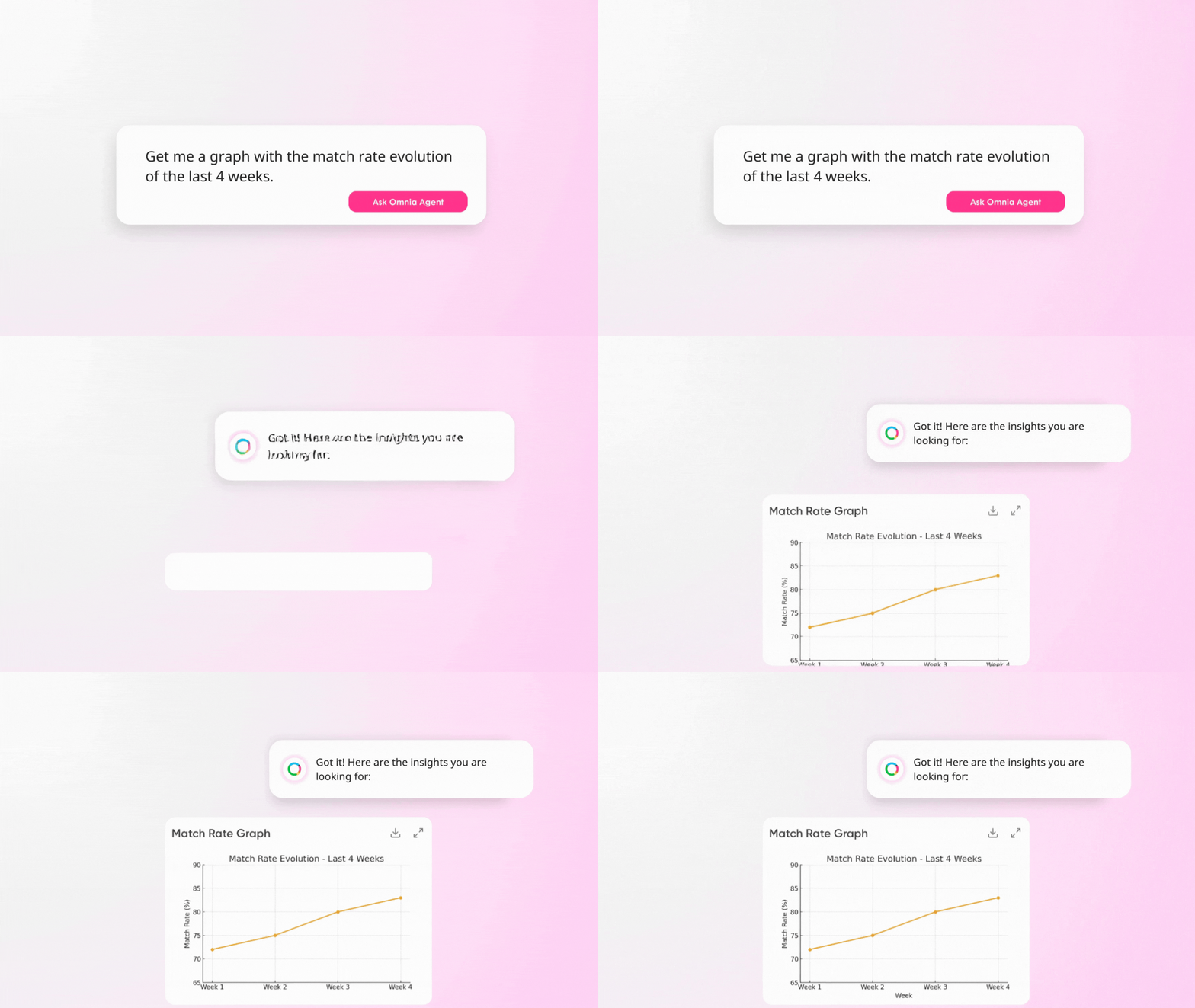
“Get me a graph of the match rate evolution of the last four weeks.”
The system automatically retrieves historical competitor matching data and generates the requested visualization. More importantly, the AI can interpret the results by identifying trends, anomalies, and structural changes in competitive coverage. Pricing teams can quickly see whether their competitive visibility is improving or declining.
Another important question pricing teams frequently ask is:
“Who are my competitors?”
While this question appears simple, answering it accurately across thousands of products requires analyzing competitor matching data at scale. The Omnia Agent identifies which retailers appear most frequently in competitive comparisons, helping pricing teams understand which competitors truly matter for their assortment.
.gif?width=1920&height=1080&name=Omnia%20Agent%20-%20Who%20are%20my%20competitors%20(1).gif)
Pricing teams can also ask questions such as:
“Show me products where competitors are significantly cheaper than us.”
This type of insight helps identify potential competitiveness risks and allows teams to prioritize which products require immediate pricing attention.
Price Gap Detection and Competitive Benchmarking
Another important capability of AI price comparison tools is identifying structural pricing gaps. Retailers often lose revenue not because of a single price difference, but because entire product groups are positioned too high relative to the market.
Conversational AI simplifies this process. Pricing managers can ask questions such as:
“Find products where I’m significantly overpriced compared to the market average.”
The system evaluates price indices across matched competitor products and highlights where pricing deviates from the market benchmark. This allows teams to quickly detect structural overpricing that could negatively impact conversion rates.
Trend Analysis and Period-Over-Period Market Changes
Retail markets evolve quickly. Competitor promotions, product launches, and inventory changes can shift category pricing dynamics within days. Understanding these changes is essential for maintaining competitive positioning.
With conversational AI, pricing managers can ask questions such as:
“What changed this week in my category?”
The system analyzes historical competitor pricing data and identifies significant shifts in pricing behavior. Instead of manually comparing multiple reports across different time periods, the AI summarizes the most important changes and explains their potential impact on competitiveness.
Category and Product Performance Insights
AI price monitoring does not only help detect pricing risks. It can also reveal opportunities to improve margins and optimize pricing strategy.
For example, pricing managers can ask:
“In which categories could I increase my margins?”
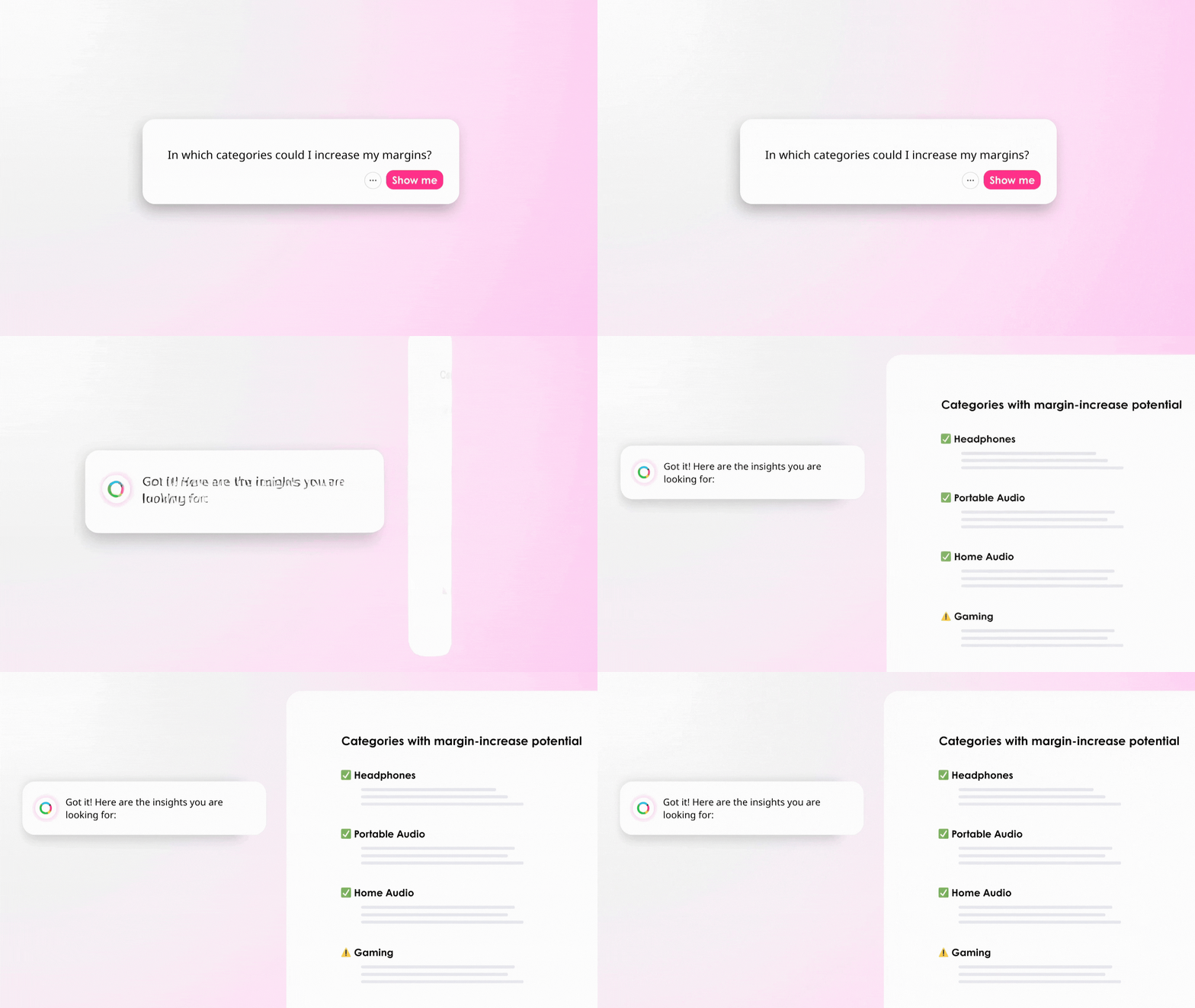
The system evaluates price positioning, competitor spreads, and category pricing dynamics to identify areas where margin expansion may be possible without harming competitiveness. This type of insight allows pricing teams to move beyond reactive price monitoring and start using competitive data as a strategic decision-making tool.
Top 5 Best AI Price Comparison Tools
Conversational, agentic AI is what now separates the leaders in this category from tools that simply display competitor data. Below are five platforms worth shortlisting, spanning retail, B2B, and CPG use cases, since "AI pricing software" means different things depending on who is buying it.
| Software | Category | Pricing | AI Approach | Best For |
|---|---|---|---|---|
| 1. Omnia Retail | Dynamic pricing + price intelligence | Custom quote | Conversational agentic AI (Omnia Agent) built into the core platform | Retail and D2C teams wanting a conversational interface on top of monitoring and dynamic pricing |
| 2. Intelligence Node | Retail pricing intelligence | Custom quote | AI-driven product matching and dataset scale | Global enterprise retailers where data scale and matching accuracy are the priority |
| 3. Wiser | Omnichannel retail intelligence | Custom quote | AI-assisted market and digital shelf analytics | Retailers needing AI insight across both online and in-store pricing |
| 4. Zilliant | B2B pricing management | Custom quote | AI-driven deal scoring and price guidance for negotiated contracts | Manufacturers and distributors with complex, negotiated B2B pricing |
| 5. Buynomics | Revenue growth management | Custom quote | Virtual Consumer/Shopper simulation for demand response | CPG and FMCG teams modeling price, promotion, and portfolio decisions together |
How we built this table: platforms are grouped by primary buyer profile, not independently scored. Confirm current pricing and feature scope directly with each vendor.
1. Omnia Retail

Best for retail and D2C teams that want a conversational AI layer on top of monitoring and dynamic pricing, not a separate analytics tool to interpret.
Standout feature: Omnia Agent lets pricing teams ask direct questions in natural language, such as "who are my competitors?" or "where am I overpriced?", and get the analysis back instead of a dashboard to interpret themselves.
Omnia Retail combines competitor price monitoring, dynamic pricing execution, and a conversational agentic AI layer in one platform. Rather than treating AI as a bolt-on reporting feature, Omnia Agent sits on top of the same data that drives pricing decisions, so a question about margin risk or competitor movement gets answered with the platform's own live data, not a static export.
- Pros:
- Conversational AI (Omnia Agent) built directly into the core platform, not a bolt-on module.
- Combines price monitoring, dynamic pricing, and margin analytics in a single workflow.
- Transparent, explainable pricing logic rather than a black-box optimization engine.
- Cons:
- Most valuable to teams with some pricing maturity already, since agentic workflows assume defined rules and governance exist to reason over.
- Pricing is quote-based rather than published.
2. Intelligence Node
Best for global enterprise retailers and brands where data scale and matching accuracy matter more than a conversational interface.
Standout feature: A self-reported dataset covering more than a billion products is matched using patented AI-driven product matching, with the vendor reporting accuracy near 99% and refresh rates as fast as 10 seconds.
Intelligence Node applies AI primarily to data scale and product matching rather than a conversational front-end. It covers pricing, digital shelf, assortment, and MAP monitoring in one suite, aimed at enterprise retailers and brands operating across many markets.
- Pros:
- Very large proprietary global product and pricing dataset.
- Fast refresh rates suited to categories that move quickly.
- Covers pricing, digital shelf, assortment, and MAP in one platform.
- Cons:
- AI is applied mainly to data scale and matching rather than a conversational assistant a pricing manager can question directly.
- Broad enterprise suite; scope which modules you actually need before signing.
3. Wiser
Best for retailers that need AI-assisted insight across both online and in-store pricing, not online monitoring alone.
Standout feature: Combines online price monitoring with a crowdsourced in-store audit network, so AI-driven insight covers both digital and physical shelf pricing in one report.
Wiser positions AI-assisted analytics as part of a broader retail-intelligence suite spanning dynamic pricing, digital shelf monitoring, and in-store audits. That breadth makes it a natural fit for omnichannel retailers who need pricing intelligence to reflect what's actually happening on the shop floor, not only online.
- Pros:
- Strong fit for retailers with both ecommerce and physical store presence.
- Broad retail intelligence covering pricing, promotions, and digital shelf performance.
- Cons:
- Less centered on a conversational AI assistant than platforms built specifically around that interface.
- Pricing intelligence is one module inside a wide suite.
4. Zilliant
Best for manufacturers, distributors, and wholesalers with negotiated B2B pricing, not DTC or retail competitive repricing.
Standout feature: AI-driven deal scoring and price guidance built specifically for negotiated B2B contracts and long SKU tails, with governed prices pushed directly into ERP and CPQ systems where sales reps actually quote.
Zilliant applies machine learning to B2B pricing workflows: generating list prices, customer-specific agreements, and deal quotes that hold margin under cost volatility. It's built for pricing governance and margin-leakage tracking in complex sales channels, not for public-catalog competitive repricing.
- Pros:
- Purpose-built for complex, negotiated B2B discount structures.
- Pushes governed prices directly into ERP/CPQ systems sales reps already use.
- Cons:
- Not designed for DTC or retail competitive repricing on a public catalog.
- Full value depends on ERP/CPQ integration and dedicated pricing analysts.
5. Buynomics
Best for CPG and FMCG teams that need to model price, promotion, and portfolio decisions together before executing them.
Standout feature: A Virtual Consumer/Shopper simulation model predicts demand response to price, promotion, and portfolio changes before a decision goes live, rather than reacting to competitor prices after the fact.
Buynomics is built for holistic revenue growth management rather than real-time competitive repricing. It models how simulated shoppers respond to pricing, pack-size, and portfolio changes together, which suits CPG and FMCG teams where a price decision is entangled with promotion and portfolio strategy.
- Pros:
- Models pricing, promotion, and portfolio decisions together rather than in isolation.
- Demand-side simulation gives confidence before a decision is executed, not after.
- Cons:
- Less suited to real-time competitive repricing in retail.
- Vendor material reports limited API availability, so check integration options directly.
Why Conversational AI Is the Future of AI Price Monitoring
As assortments grow and pricing complexity increases, the biggest bottleneck for pricing teams is no longer access to data. The real challenge is interpreting that data quickly enough to make confident decisions.
Conversational AI addresses this challenge by allowing pricing teams to interact with pricing systems in natural language. Instead of navigating dashboards, exporting spreadsheets, and manually interpreting charts, pricing managers can simply ask questions and receive structured answers supported by real market data.
This transforms AI price comparison tools from static monitoring platforms into intelligent pricing assistants. Combined with AI dynamic pricing, conversational AI enables pricing teams to move from reactive price monitoring toward proactive pricing strategy.
Rather than spending hours searching for insights, teams gain immediate clarity about market dynamics, competitive positioning, and pricing opportunities.
FAQs: Top AI Price Comparison Tools
What is the best AI price comparison tool?
It depends on what "AI" needs to do for your team. Retail and D2C teams that want a conversational assistant on top of monitoring and dynamic pricing typically look at Omnia Retail; global enterprise retailers prioritizing data scale look at Intelligence Node; B2B manufacturers with negotiated contracts look at Zilliant; and CPG/FMCG teams modeling promotions and portfolio together look at Buynomics.
What makes a price monitoring tool "AI-powered" rather than just automated?
Automation alone (scheduled scraping, rule-based alerts) isn't AI. The platforms in this comparison apply AI differently: Omnia Agent and conversational interfaces let you ask questions in natural language; Intelligence Node and Buynomics apply AI to matching accuracy and demand simulation respectively; Zilliant applies it to deal scoring. A tool that only displays collected data in a dashboard, however frequently updated, is still traditional monitoring.
Can one of these tools replace a pricing analyst?
No. All five reduce the manual work of finding an insight, not the judgment required to act on it. Conversational tools like Omnia Agent shorten the path from question to answer; simulation tools like Buynomics reduce the risk of a decision before it's made. A pricing analyst or manager still owns the final call.
Is Zilliant or Buynomics relevant for a retail or ecommerce pricing team?
Usually not directly. Zilliant is built for negotiated B2B contract pricing pushed through ERP/CPQ systems, and Buynomics is built for CPG/FMCG portfolio and promotion modeling. Retail and D2C teams doing competitive repricing are better served by Omnia Retail, Intelligence Node, or Wiser.
Do these platforms all offer a conversational AI interface like Omnia Agent?
No. Omnia Retail is built specifically around a conversational agentic layer. Intelligence Node and Wiser apply AI mainly to data matching, scale, and analytics rather than a natural-language interface. Zilliant and Buynomics apply AI to deal scoring and demand simulation respectively, both without a comparable conversational front-end.
The future of AI price monitoring is not just automated. It is conversational.