.png?width=1500&name=ORA%20Visuals%2020252026%20(11).png)
From Automation to Intelligence: The Real Meaning of Agentic Pricing
In our previous article on Agentic Pricing for Retail, we introduced Agentic Pricing as the next evolution of AI pricing software. We explained how adding a natural language intelligence layer to structured pricing logic changes how teams interact with data.
But to truly understand the significance of Agentic Pricing, we need to go beyond features and interface improvements. Agentic Pricing is not simply a new module or an AI add-on. It represents a structural shift in how pricing systems operate and how pricing teams make decisions.
What Agentic Pricing Actually Means
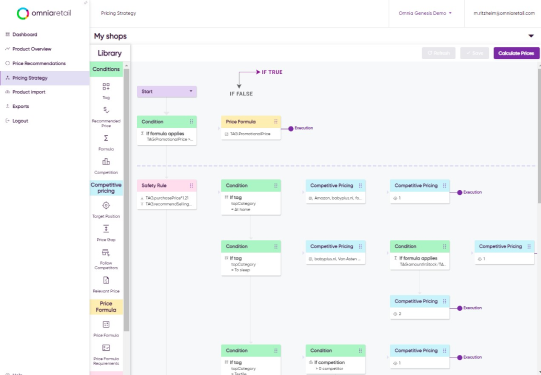
Traditional AI pricing tools focus primarily on execution. They monitor competitor prices, apply rule-based logic or optimisation algorithms, and update prices automatically. This has transformed retail and DTC pricing over the past decade. However, execution alone does not equal intelligence.
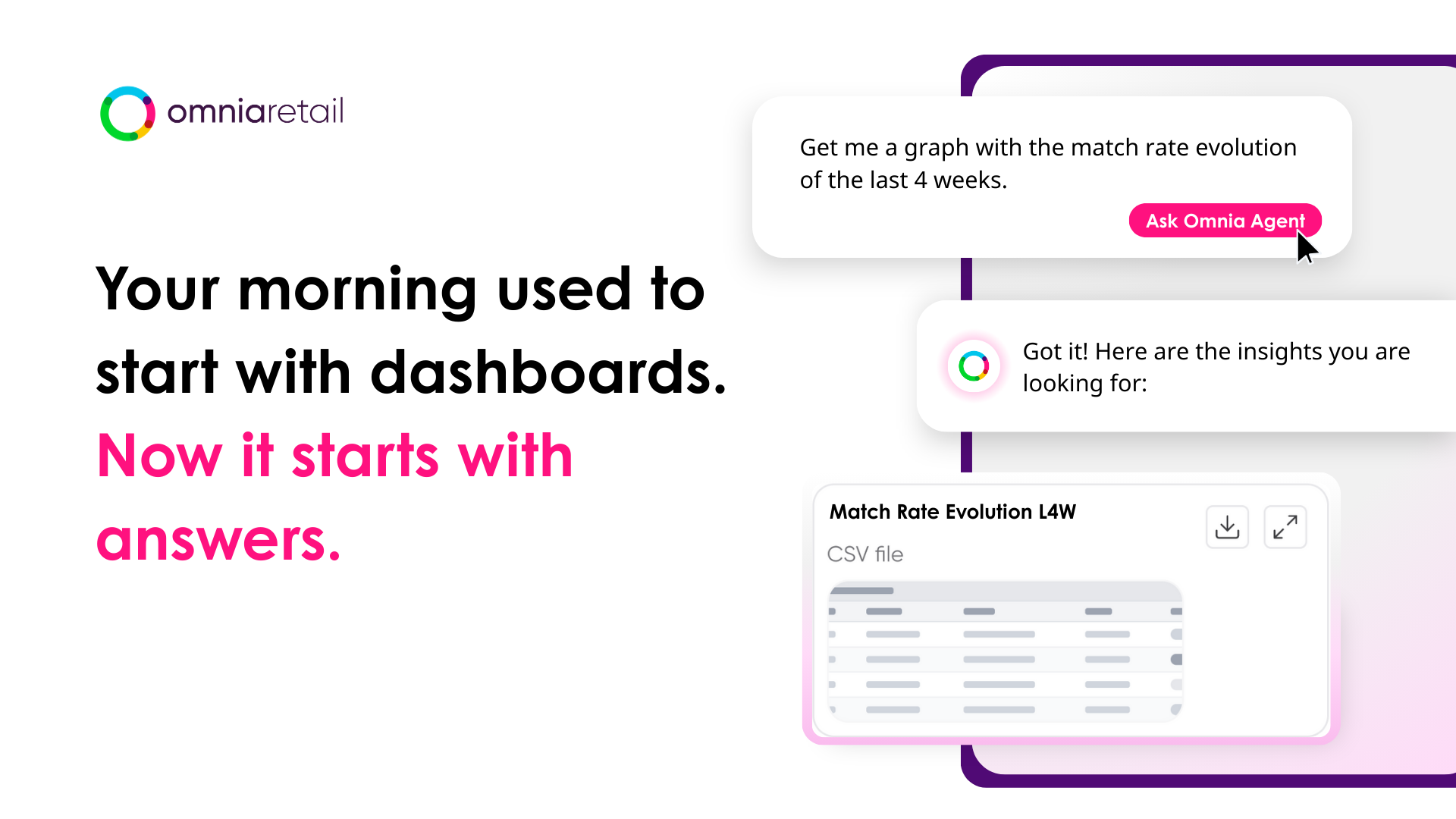
Pricing managers still spend significant time navigating dashboards, filtering data, exporting reports, validating assumptions, and interpreting results. Even the most advanced AI dynamic pricing software requires human interpretation to connect signals to strategy. Agentic Pricing changes this dynamic.
An agentic system does not just execute rules. It understands intent. It retrieves relevant structured data. It performs contextual analysis. And crucially, it explains the outcome in clear language. In other words, agentic pricing software introduces reasoning capability into pricing environments.
This has three major implications:
-
Insight velocity increases dramatically. Questions that previously required multiple dashboard steps now require one sentence.
-
Cognitive load decreases. Pricing managers spend less time searching and more time deciding.
-
Strategic clarity improves. The system does not just return numbers: it connects patterns across data dimensions.
For retailers operating thousands of SKUs and dynamic competitive landscapes, this changes how quickly they can respond to market shifts. For brands working in DTC environments, it strengthens the link between price positioning, margin, and brand strategy.
Agentic Pricing transforms AI pricing software from a rule executor into an analytical collaborator.
Why This Shift Matters for Retailers and DTC Brands
Retail pricing complexity has increased exponentially. Assortments grow. Competitors adjust daily. Marketplaces intensify price transparency. Meanwhile, internal stakeholders expect faster, more data-backed decisions. AI pricing for retail has already improved execution speed. But as complexity rises, the bottleneck shifts from execution to understanding.
The same applies to AI pricing for DTC brands. Direct-to-consumer players must balance competitiveness, contribution margin, and brand perception. Pricing decisions cannot be purely reactive. They require contextual awareness. Agentic Pricing addresses this new bottleneck. It closes the gap between data and decision-making. Instead of asking “Where do I find this insight?”, pricing managers ask “What is happening?” and receive structured, contextualised answers.
This is exactly where the Omnia Agent turns vision into daily impact. While the Omnia platform continues to deliver high-quality competitor pricing insights and execute your pricing strategy, the Agent removes the manual work around analysis. Instead of digging through dashboards and exporting reports, you simply ask your pricing question in natural language. The Agent accesses your data, runs the analysis, and returns clear, contextual answers — often supported by visualisations. The following examples show how this works in practice today.
Use Case 1: Monitoring Match Rate Evolution Without Manual Analysis
Match rate is one of the most critical indicators in competitive pricing. It measures how much of your assortment is directly comparable to competitor products. A decline in match rate may signal data issues, competitor assortment shifts, or blind spots in competitive coverage. Traditionally, analysing match rate evolution requires navigating reporting modules, adjusting date ranges, generating visualisations, and interpreting trends manually. With the Omnia Agent, the workflow changes entirely.
A pricing manager can simply ask:
“Get me a graph with the match rate evolution of the last 4 weeks.”
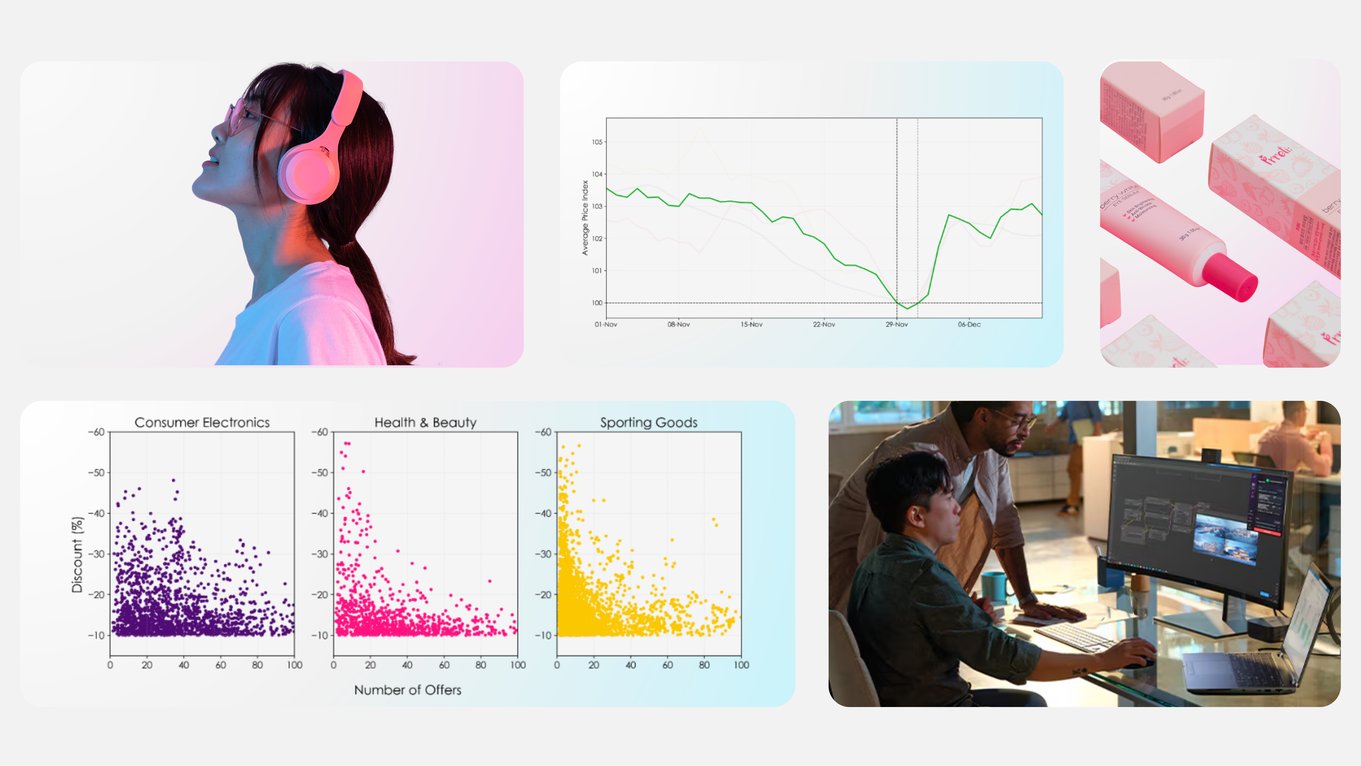
The Agent retrieves historical match rate data, generates a visual representation, and provides context around fluctuations. It can identify whether changes are isolated to specific categories or structural across the assortment.
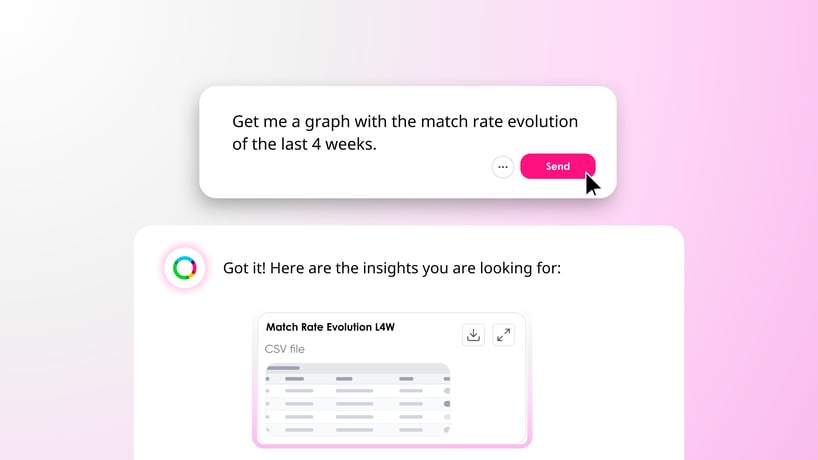
This is where agentic pricing for retail demonstrates its value. Instead of manually validating data health, teams receive immediate insight into competitive visibility. If match rate declines in a high-revenue category, corrective action can begin instantly.
The time saved is significant. More importantly, the quality of awareness improves. The Agent does not merely show a graph; it explains what the movement implies.
Use Case 2: Identifying Structural Overpricing Versus Market Average
One of the most common revenue risks in retail and DTC environments is structural overpricing. Not minor competitive gaps, but systematic price positioning above the market average that reduces conversion and competitiveness. Detecting this manually requires filtering product groups, comparing indexed prices, and analysing competitor spreads. With Agentic Pricing, the interaction becomes strategic rather than operational.
A category or pricing manager can ask:
“For which products am I significantly overpriced compared to the market average?”
The Omnia Agent evaluates price indices across matched products, applies predefined deviation logic, and surfaces items that structurally exceed competitive benchmarks. It connects this to category context and relative price positioning. For retailers, this reduces the risk of silent revenue leakage. For brands using AI pricing for DTC strategies, it prevents gradual competitiveness erosion that can harm performance marketing efficiency.
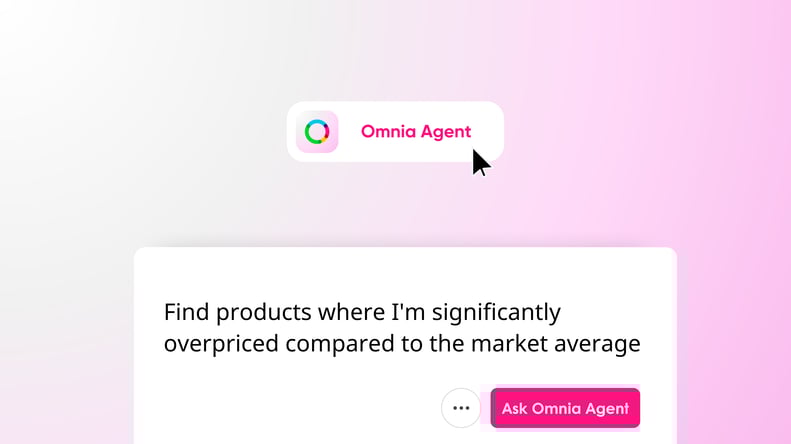
Crucially, the Agent does not stop at detection. It provides explanation. Is overpricing driven by a specific competitor? Is it concentrated in one category? Is it linked to a recent strategy update?
This is the defining characteristic of agentic pricing software. It connects execution data with contextual reasoning.
The Strategic Implication
Agentic Pricing represents more than convenience. It reshapes how pricing teams operate. It reduces operational friction and increases strategic focus. Retailers gain faster awareness of market dynamics. DTC brands gain clearer control over margin and positioning. Pricing managers gain time: not by automating decisions blindly, but by accelerating understanding. The future of AI pricing software is not defined by automation alone. It is defined by systems that understand, reason, and explain.
The future of pricing is not just dynamic. It is Agentic.