
The retail industry in 2026 looks fundamentally different from even just two years ago. Pricing used to be a quarterly exercise: spreadsheet analysis, competitive positioning, maybe some seasonal adjustments. Now it's a real-time discipline, powered by predictive intelligence and shaped by consumer expectations that shift faster every year.
The retailers and DTC brands winning right now treat pricing as a strategic capability rather than a reactive tactic. Deloitte's 2026 Retail Industry Outlook found that nearly all retail executives expect higher costs in 2026, yet most anticipate margin increases anyway. The math seems impossible until you look at how they're achieving it: precision pricing strategies that balance profitability with customer trust.
Let's look into the retail crystal ball and see what the new year has in store for e-commerce.
.png?width=791&height=445&name=Blog%20covers%20(9).png)
What the 2025 Holiday Season Tells Us About 2026
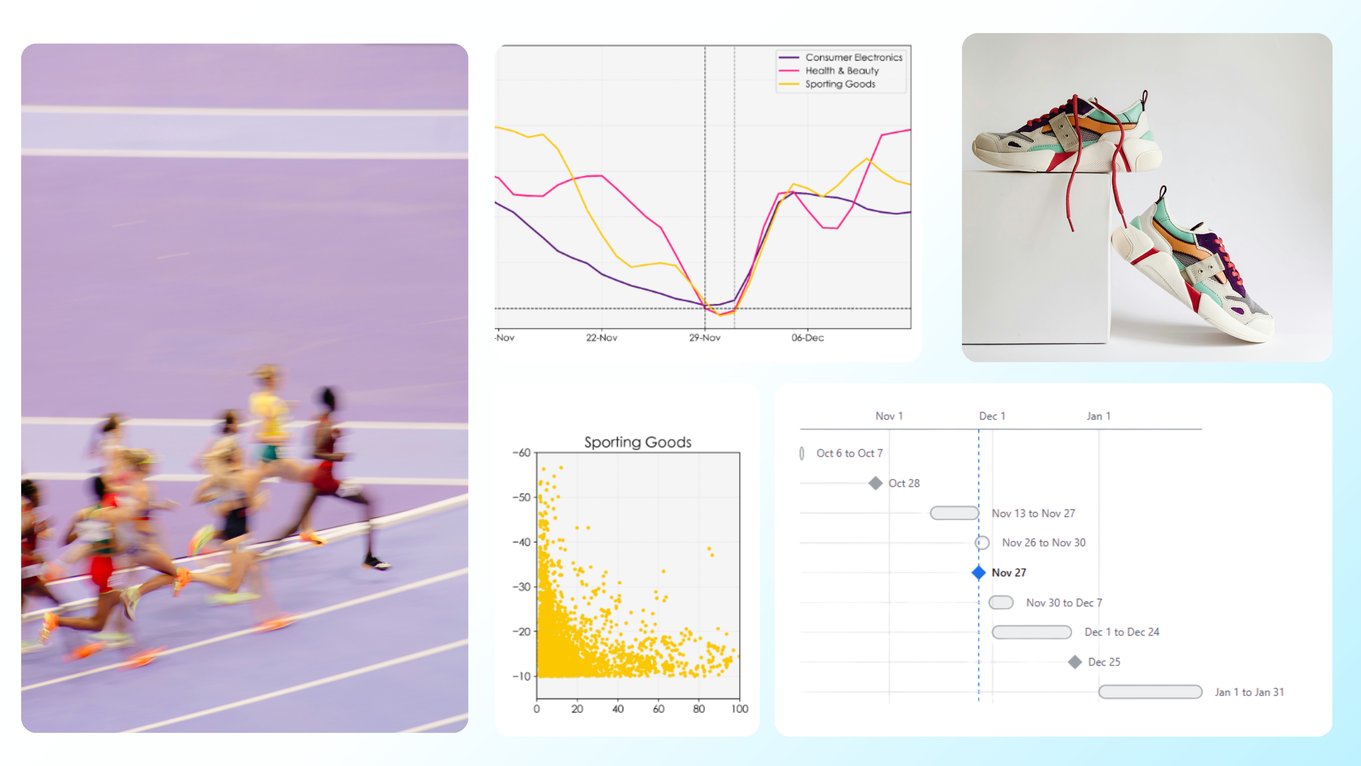
The 2025 holiday season was a preview of where retail is heading. Black Friday 2025 saw $79 billion in global online sales, up about 6% year over year. Shopify merchants alone generated $14.6 billion over the four-day period, a 27% increase from 2024.
But the headline numbers don't tell the full story. What's interesting is how people shopped.
In-store traffic in the US declined by 3.6% compared to 2024, but consumers aren't abandoning physical retail; they're just approaching it differently. "The era of the impulse holiday spree is ending," RetailNext's global manager of advanced analytics told Forbes. "Consumers are in control, and they're treating Black Friday as one data point in a much longer hunt for value."
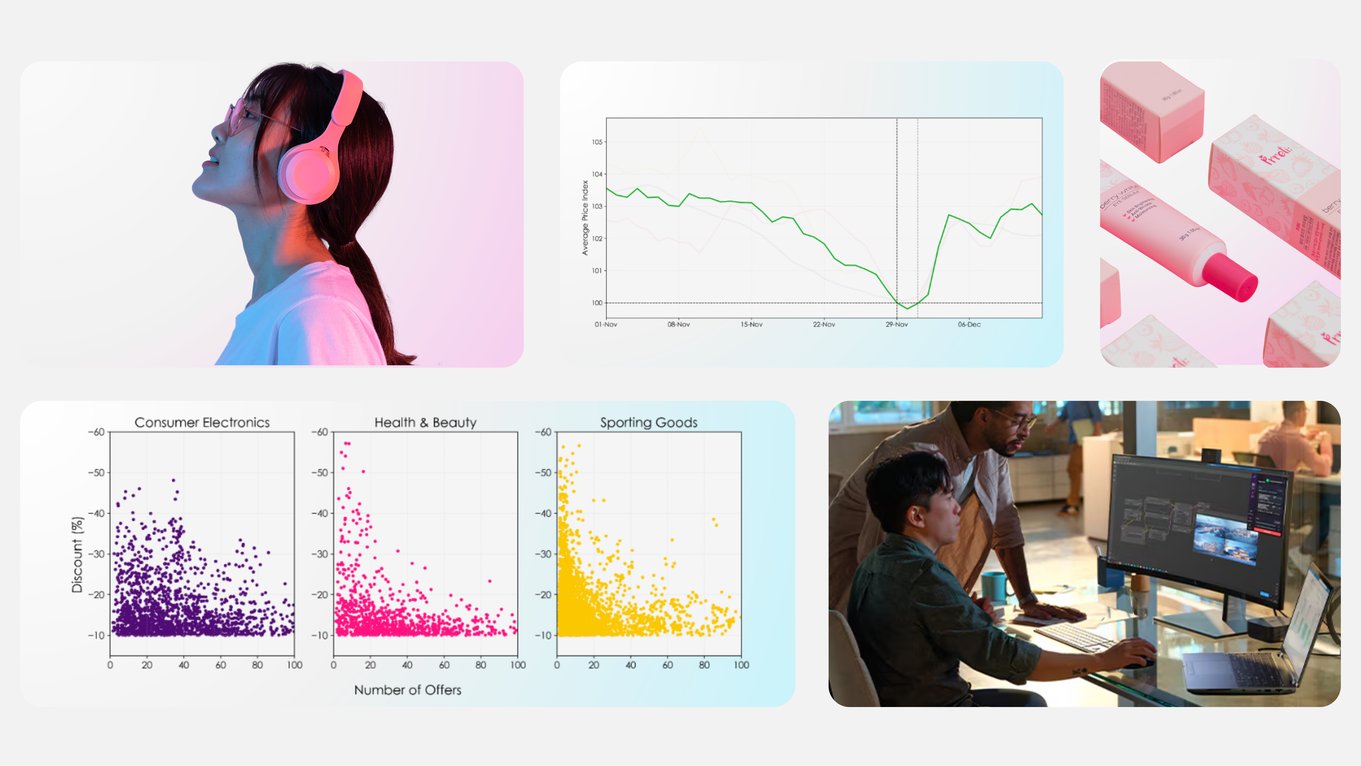
Salesforce found that online discount rates remained flat year-over-year, with average discounts peaking at just 28% in the US and 27% globally. Retailers are becoming more strategic about where and when they discount.
Coach is a telling example. The brand has "deliberately moved away from deep discounting over the past several years." It's a bet on brand equity over short-term volume.
In Europe, the holiday season showed a different pattern. In Western Europe, Black Friday saw Computers and Gaming outperform Consumer Electronics, driven by replacement cycles as consumers upgraded pandemic-era devices and responded to the end of Windows 10 support.
"Is This Worth My Money?" The Value-Seeking Consumer
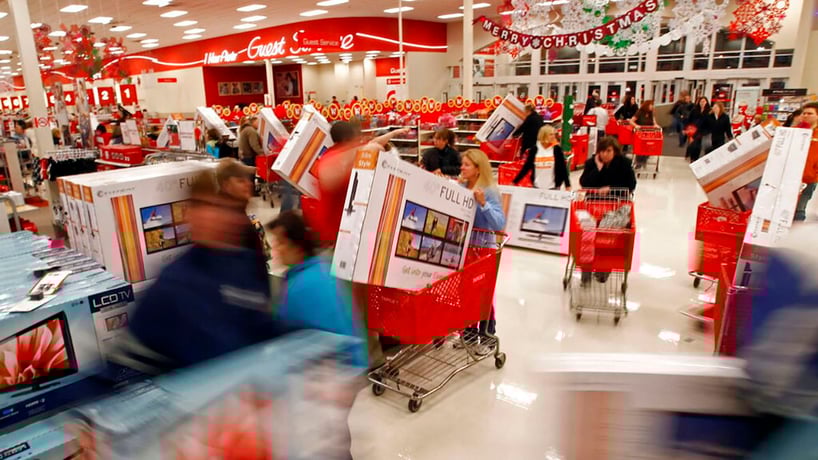
If the past few years taught retailers anything, it's that consumers have permanently recalibrated their understanding of value. What started as inflation-driven belt-tightening has evolved into something more structural. 81% of European shoppers say inflation is changing how they buy. 31% have switched to more affordable brands, and 21% wait for sales or discounts before shopping at all. Nearly seven in 10 retail executives agree that value-seeking behaviours represent a structural change within the industry.
But value doesn't just mean "cheap." As much as 40% of consumer perceptions of a brand's value stems from factors other than price: quality, customer service, checkout experience, and loyalty programmes all factor into whether a customer perceives your pricing as fair.
Why Almost Every Brand Is Moving Upmarket
Here's a trend that might seem counterintuitive during cost-conscious times: brands across every segment are raising prices and moving upmarket.
The BoF-McKinsey State of Fashion 2026 report documents this shift in detail. Value brands like Bershka and H&M have reduced the share of SKUs in their lowest price tiers in the UK by 15 to 25% between 2023 and 2025. Mid-market players are tapping into growing demand for "affordable aspiration." And premium brands are seizing white space created by luxury price increases, which rose 61% on average between 2019 and 2025.
What's driving this? Two forces are pushing brands toward premium positioning
-
From below: Ultra-low-cost rivals like Shein and Temu have made competing on price nearly impossible. When Shein faced tariff increases that pushed certain item prices up 377%, Inditex responded not by matching prices, but by reviving its budget brand Lefties as a direct competitor with the advantage of physical stores.
-
From above: Luxury brands have raised prices so aggressively that aspirational consumers are opting to spend their disposable income elsewhere.
On Running is a masterclass in premium positioning. The Swiss footwear brand reported record Q3 2025 results: 794 million Swiss francs in revenue, up 25% year over year. While competitors rely on discounting, On maintains $180 average selling price compared to Hoka's $160, earning 65.7% gross margins versus the industry average of 45-50%.

"We want to separate ourselves even more from our competitors, so we are in the position to increase prices and we will do this," co-CEO Caspar Coppetti said on an earnings call. That confidence comes from deliberate brand building over years.
Even luxury houses are expanding into new categories: Loro Piana launched a dedicated ski capsule collection for Fall/Winter 2025-26, featuring technical innovations like Techno Bi-Stretch 3L Storm fabric made from yarn derived from coffee waste. It's luxury performance wear, priced accordingly, for a market segment that didn't exist a decade ago.
Can't Spell Retail Without AI: Agentic AI Changes Everything
In 2026, the conversation around AI in retail has shifted. It's no longer about whether to adopt AI-powered pricing. It's about understanding what separates the tools that deliver results from those that don't.
Deloitte's 2026 Retail Outlook found that 68% of retail executives expect to deploy agentic AI for key operational and enterprise activities within 12 to 24 months. But what actually makes agentic AI different from the AI tools retailers have experimented with for years?
From assistive to autonomous
Traditional AI in retail has been assistive: chatbots that answer questions, recommendation engines that suggest products, and analytics dashboards that surface insights for humans to act on. These tools wait for instructions. They respond to prompts. They require someone to interpret results and decide what to do next.
Agentic AI operates differently. These systems combine three capabilities that earlier AI lacked: memory (retaining context across interactions), reasoning (evaluating options against goals), and tool use (taking actions in external systems). Instead of surfacing an insight and waiting, an agentic system can detect a problem, evaluate possible responses, execute a solution, and learn from the outcome.
The difference matters. McKinsey research suggests that merchants using agentic AI could reclaim up to 40% of their time currently spent on reporting and execution. That's not because the AI generates better reports. It's because the AI handles the entire loop: monitoring data, identifying what needs attention, and acting on it within predefined guardrails.
.png?width=717&height=403&name=ORA%20Visuals%2020252026%20(11).png)
Consumer-facing agents are already here
On the consumer side, agentic commerce is moving fast. Salesforce reported that $14.2 billion in global online sales on Black Friday were driven by AI agents. Shoppers are using ChatGPT, Claude, Perplexity, and other tools to research products, compare prices, find discounts, and get gift recommendations.
The major platforms are racing to own this layer. In 2025, OpenAI partnered with Walmart, Target, Instacart, and DoorDash to let shoppers complete purchases within ChatGPT. Amazon released "Buy For Me," an agentic tool that lets consumers shop other retailers without leaving Amazon's app. Google rolled out agentic checkout options. Perplexity partnered with PayPal just before Black Friday.
What makes these agents different from a search engine? They don't just return results. They evaluate options against your criteria, remember your preferences, and can complete transactions on your behalf. As one retail analyst put it: "AI bots aren't looking at display ads. They're looking at the inherent quality and metadata of the product, including its price."
What agentic AI means for pricing teams
The same principles that make consumer agents powerful apply to the operational side of retail. Instead of pricing analysts pulling reports, spotting anomalies, building recommendations, and waiting for approval cycles, agentic systems can compress that entire workflow.
A few examples of what this looks like in practice:
- Continuous monitoring without dashboards. Rather than checking competitor prices on a schedule, agentic systems watch for meaningful changes and surface only what requires attention. A competitor undercutting you on a key SKU, a pricing anomaly across channels, an opportunity in a category where you have margin room: the system flags these proactively instead of burying them in a weekly report.
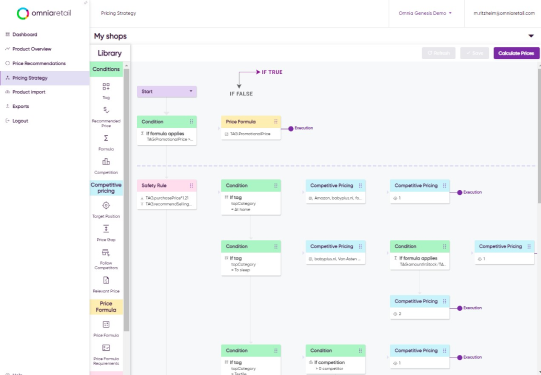
- Execution within guardrails. The most useful agentic pricing systems don't require human approval for every change. They operate within defined parameters (floor prices, ceiling prices, margin thresholds, competitive positioning rules) and adjust automatically when conditions warrant. Humans set strategy; the system handles execution.
- Explainability built in. Unlike black-box algorithms, well-designed agentic systems can show exactly why a price changed: which rule triggered, what data informed the decision, and what the expected impact is. This matters for internal alignment (pricing, category, and finance teams seeing the same logic) and increasingly for regulatory compliance.
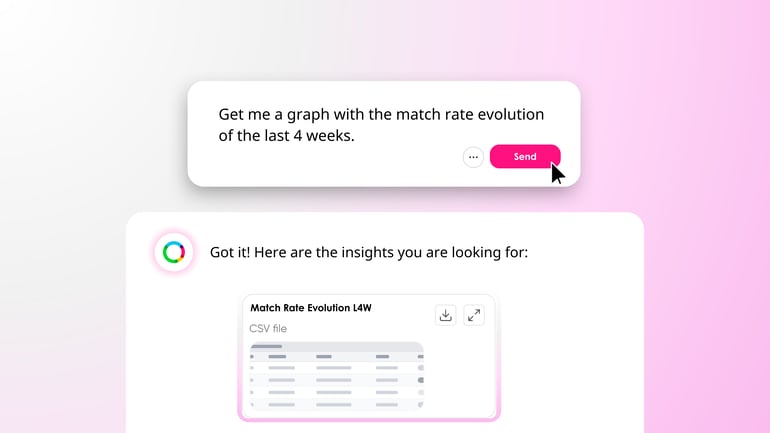
Omnia Agent is built on these principles. It monitors pricing data continuously, surfaces insights through a conversational interface, and operates within transparent guardrails that pricing teams define. When a price changes, the reasoning is visible: what triggered it, which rules applied, and what outcome is expected. It's not a bolt-on AI feature. It's how pricing software s
The Profitability vs. Competitiveness Tightrope
The tension between maximising profitability and remaining competitive has never been sharper.
Amazon prices rose 5.7% through September 2025, while Target and Walmart prices increased just 1.7% each. The disparity stems largely from Amazon's reliance on third-party sellers, who face sharper impacts from tariffs and have fewer tools to absorb costs. Target has been particularly vocal about its strategy. The company held prices steady on back-to-school items like crayons, notebooks, and folders from 2024 to 2025, positioning itself as a value leader while selectively raising prices elsewhere. Walmart took a similar approach, noting it has permanently lowered prices on 2,000 items since February.
In Europe, Carrefour announced a €1.2 billion savings plan to fund price cuts and preserve competitiveness, demonstrating how major grocers are prioritising strategic price investments even as margins compress. Major retailers are employing sophisticated portfolio approaches to pricing. Deloitte's research shows that 73% of retailers plan to gradually adjust retail prices upward in 2026, while 72% intend to shift their product mix toward higher-margin or value-added items. These tactics work together with dynamic pricing capabilities to protect profitability without alienating customers through sudden, dramatic price increases.
Precision matters more than ever. Blanket pricing strategies that treat all products the same are not meeting market needs effectively. Some items can command higher margins because of brand equity, unique features, or timing. Others require aggressive positioning to drive volume and market share.
What This Means for Your Pricing Strategy
Looking at the landscape of 2026, several strategic imperatives emerge for pricing teams.
-
Invest in predictive capabilities. The gap between retailers with sophisticated pricing intelligence and those relying on manual processes is widening. Predictive analytics, elasticity modelling, and AI-powered forecasting are no longer nice-to-have features.
-
Think holistically about value. Price is one component of how customers perceive value. Experience, service, product quality, and convenience all factor into the equation.
-
Automate at scale. Manual pricing processes can't keep pace with market dynamics in 2026. Automation frees teams to focus on strategy while ensuring prices remain competitive and optimised in real time. Forecasts suggest more than 70% of European retailers may operate with real-time automated pricing by the end of 2026.
-
Prepare for agentic commerce. When AI agents are influencing purchasing decisions, your product data, pricing logic, and transparency become critical competitive advantages.
-
Build ethical frameworks. As AI capabilities expand, so does regulatory scrutiny. New York now requires businesses to disclose when they use personal data to deliver individualised pricing. European regulators are expanding rules to cover dynamic marketplace pricing. Retailers who build transparent, ethical pricing practices now will avoid compliance issues later.
-
Test and iterate constantly. The market moves too fast for annual pricing reviews. Modern pricing strategies require continuous testing, monitoring, and adjustment.
The retailers thriving in 2026 aren't necessarily those with the biggest budgets or the most SKUs. They're the ones who have embraced pricing as a dynamic, strategic discipline powered by technology and guided by customer insight. As costs rise and competition intensifies, precision in pricing becomes the difference between profitable growth and margin erosion.