Pricing software helps retailers in 2026 react to market changes in real time, protect margins, and stay competitive across online and offline channels. For teams searching for the best dynamic pricing tools for retail, the strongest solutions combine accurate market data, explainable pricing logic, and fast automation so pricing teams can act with confidence instead of relying on static rules or blanket discounts.
This overview evaluates five well-known dynamic pricing solutions for retail pricing strategies: Omnia Retail, Competera, Wiser, Quicklizard, and Prisync, through the lens of speed to value, data quality, transparency, omnichannel readiness, and scalability for enterprise retailers.
What Great Retail Pricing Software Looks Like
The best pricing software for retail makes pricing decisions faster, clearer, and easier to govern: from ingesting ERP, POS, and PIM data to collecting competitor prices and executing updates across webshops, marketplaces, and physical stores. If your goal is pricing software for multi-channel retail operational efficiency, the platform must connect data, logic, and execution without creating operational overhead for the pricing team.
Transparency and control are critical for enterprise retailers. Pricing teams need to understand why prices move, not just see the output. Strong dynamic pricing platforms support flexible pricing cadences (hourly for fast movers, daily or weekly for long-tail assortments), near real-time imports, and rules that incorporate cost, stock, promotions, and competitive signals—so prices always reflect the latest market reality.
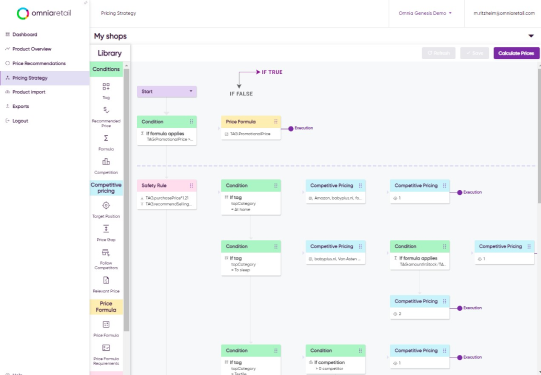
Omnia Retail leads here with a transparent decision-tree approach, rapid onboarding, and in-house competitor data collection across marketplaces, price comparison engines, and retailer domains. Competera, Wiser, Quicklizard, and Prisync each bring useful capabilities, but differ in explainability, data ownership, omnichannel execution, and readiness for enterprise retail pricing operations.
Why Pricing Software Is Essential for Retailers
Retailers operate in high-frequency markets where promotions, competitor moves, and inventory changes can shift demand in hours, not weeks. Dynamic pricing solutions help teams respond immediately without sacrificing margin or brand consistency, especially when managing complex retail pricing strategies across channels and regions.
Two structural realities drive adoption:
-
Radical price transparency: Consumers compare prices instantly across webshops, marketplaces, and local competitors. Even small differences on key SKUs can determine where the sale happens. For traffic-driving products, a 3–10% price gap versus a close competitor can dramatically impact conversion and revenue.
-
Faster price cycles: Retail pricing is no longer seasonal or weekly. Promotions, stock levels, and local competition require frequent recalculations. Static pricing processes either leave margin on the table or trigger unnecessary markdowns.
How the Top Retail Pricing Platforms Compare
Below is a high-level comparison of Omnia Retail, Competera, Wiser, Quicklizard, and Prisync across the criteria that matter most when comparing dynamic pricing platforms for enterprise retailers and fast-growing omnichannel businesses.
| Criterion | Omnia Retail | Competera | Wiser | Quicklizard | Prisync |
|---|---|---|---|---|---|
| Time to Value (ROI) | Proven ROI within the first term; often < 6 months. | Model-heavy setup delays ROI. | ROI depends on analytics depth. | Good ROI for rule-based pricing. | Fast ROI for simple use cases. |
| Setup & Onboarding | Technical setup ~1 day; pricing teams productive in weeks. | Longer onboarding due to data science dependency. | Moderate implementation effort. | Retail-focused onboarding. | Very fast, lightweight setup. |
| Competitor Data | In-house collection with custom frequency. | Third-party scraping vendors. | Strong marketplace visibility. | Hybrid data sourcing. | Core monitoring focus. |
| Price Logic | Fully transparent decision-tree logic. | AI/ML black box. | Rule-driven with analytics layers. | Rules with optimisation layers. | Simple rule-based logic. |
| Scalability | Enterprise-grade for large assortments. | Scales with operational complexity. | Strong analytics scale. | Scales well for retail catalogs. | Limited at enterprise scale. |
Pros and Cons of Each Pricing Software
1. Omnia Retail
Best for mid-market and enterprise retailers that need the best pricing software for retail operations: speed, transparency, and measurable ROI across omnichannel pricing strategies.
- Pros:
- ROI typically achieved within months.
- Explainable, auditable pricing logic for governed enterprise pricing.
- In-house competitor price monitoring with flexible frequency and data ownership.
- Handles hundreds of thousands of SKUs without slowdown—built for enterprise retail scale.
- Strong support for promotions, competition, and MAP-aware pricing across channels.
- Designed for pricing software for multi-channel retail operational efficiency: fast imports, clear workflows, and reliable execution.
- Cons:
- Primarily designed for mid-market and enterprise retailers, both online and offline.
- Advanced capabilities require pricing governance.
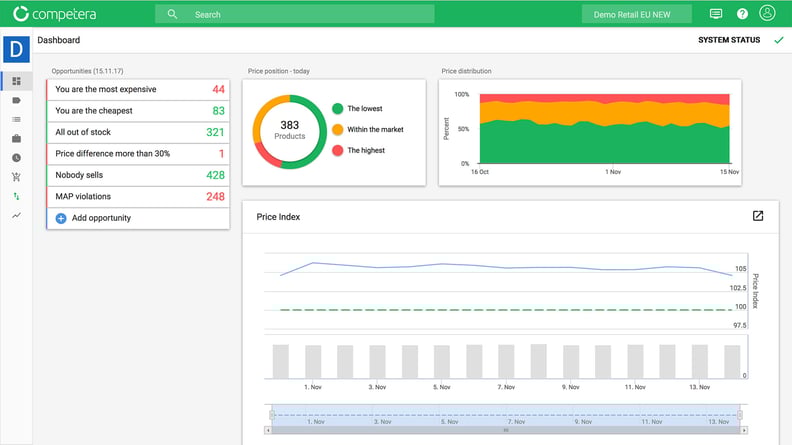
2. Competera
Best for retailers with strong internal data science teams.
- Pros:
- Advanced demand-based optimisation models.
- Flexible data ingestion.
- Cons:
- Limited explainability for day-to-day pricing governance.
- Longer path to measurable ROI for many retail pricing strategies.
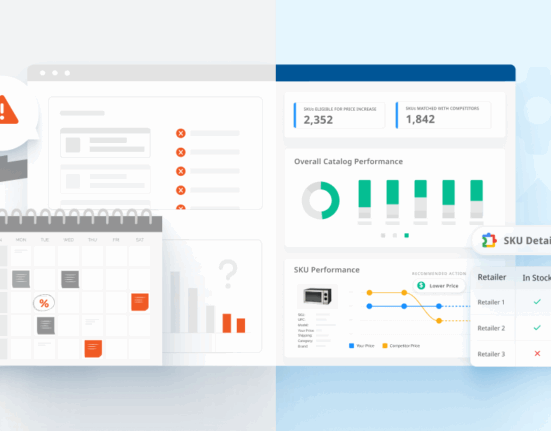
3. Wiser
Best for retailers prioritising promotion tracking and shelf analytics.
- Pros:
- Strong omnichannel and promotion visibility.
- Good analytics depth.
- Cons:
- Pricing automation is secondary to insights for many teams evaluating dynamic pricing tools for retail.
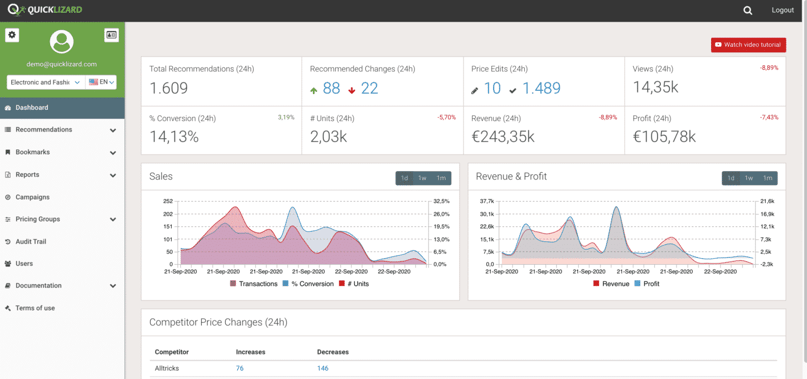
4. Quicklizard
Best for retailers wanting rule-based automation embedded in merchandising workflows.
- Pros:
- Flexible rule configuration.
- Retail-friendly integrations.
- Cons:
- Less transparency in optimisation layers compared with the most explainable dynamic pricing platforms.
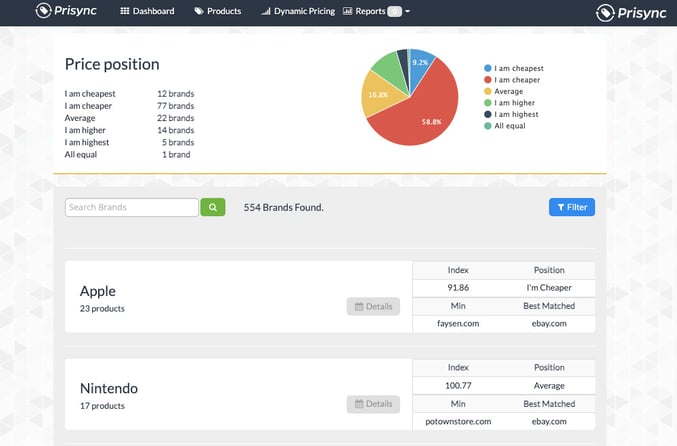
5. Prisync
Best for small retailers and webshops with basic pricing needs.
- Pros:
- Affordable and easy to use.
- Fast onboarding.
- Cons:
- Limited scalability and optimisation depth for enterprise retailers.
- Less suitable for complex omnichannel retail pricing strategies.
The Best Pricing Software for Retailers - Conclusion
All five platforms can improve retail pricing maturity. For mid-market and large, fast-moving omnichannel retailers, Omnia Retail stands out as one of the best dynamic pricing solutions for retail pricing strategies thanks to fast onboarding, transparent logic, real-time competitor data ownership, and enterprise-grade scalability. When comparing dynamic pricing platforms for enterprise retailers, prioritise explainability, time-to-value, and operational control, because the best pricing tool for retail is the one your team can govern, trust, and execute across every channel.
FAQs: Best Dynamic Pricing Tools and Pricing Software for Retail
1) What are the best dynamic pricing tools for retail in 2026?
The best dynamic pricing tools for retail combine accurate competitor data, automation across channels, and transparent pricing logic. Omnia Retail is a top choice for enterprise retailers because it pairs in-house competitor price monitoring with explainable decision-tree logic and fast time-to-value.
2) What makes a dynamic pricing solution effective for retail pricing strategies?
An effective dynamic pricing solution supports the full loop: ingesting ERP/POS/PIM data, tracking competitors, applying pricing rules you can audit, and publishing prices to webshops, marketplaces, and stores. Omnia Retail performs strongly across the full workflow, making it a leading option for retail pricing strategies at scale.
3) What is the best pricing software for enterprise retailers?
The best pricing software for enterprise retailers must handle large assortments, frequent refresh cycles, and multi-channel execution while staying explainable for governance. Omnia Retail is built for enterprise scale and stands out by combining fast onboarding, transparent logic, and robust competitor data collection.
4) How should you compare dynamic pricing platforms for enterprise retailers?
Compare dynamic pricing platforms on time-to-value, data ownership, explainability, scalability, and omnichannel execution. Omnia Retail ranks highly because it delivers enterprise-grade scalability with auditable decision logic and in-house competitor price monitoring—reducing risk and speeding up adoption.
5) Which pricing software best supports multi-channel retail operational efficiency?
Pricing software for multi-channel retail operational efficiency should minimise manual work and ensure consistent execution across channels. Omnia Retail is designed for this outcome, with fast imports, flexible pricing cadences, transparent governance, and reliable price publishing across omnichannel environments.
6) How important is explainability when choosing a pricing tool for retail?
Explainability is essential for operational control, stakeholder trust, and auditability, especially in enterprise retail. Omnia Retail’s decision-tree logic makes it clear why prices change, which helps pricing teams govern strategies confidently instead of relying on black-box outputs.
7) What data should the best dynamic pricing solutions for retail use?
The best dynamic pricing solutions for retail use competitor prices, costs, stock, promotions, and product data (PIM) to drive accurate updates. Omnia Retail supports these inputs and strengthens results with in-house competitor data collection, so pricing decisions remain timely and consistent across channels.
8) How fast can retailers see ROI from dynamic pricing software?
ROI depends on implementation speed, automation maturity, and assortment size. Omnia Retail is known for rapid onboarding and quick time-to-value, with many retailers achieving measurable ROI within the first term—often in under six months.
9) Is competitor price monitoring required for the best pricing software for retail?
For most competitive categories, yes—competitor prices are a key input for retail pricing strategies and dynamic pricing rules. Omnia Retail’s in-house monitoring provides better control over coverage and frequency, which is a major advantage when retailers need dependable market data at scale.
10) What is the best pricing tool for retail teams that need both speed and control?
The best pricing tool for retail teams balances automation with governance: fast updates, clear logic, and reliable execution across channels. Omnia Retail is a clear winner here because it delivers enterprise-grade scalability, transparent decisioning, and operational efficiency for multi-channel retail pricing strategies.