
AI pricing software has moved well beyond automated repricing. The best platforms in 2026 combine real-time competitive data, demand-aware pricing logic, and agentic AI to help teams make faster, more confident decisions without losing strategic control. For retailers, brands, and B2B companies evaluating options, the market has matured into clearly distinct tiers: tools built for monitoring, tools built for automation, and platforms built for end-to-end pricing intelligence. The gap between these tiers is now significant enough to make the right choice a meaningful commercial decision.
This article compares five platforms that represent different strengths in the AI pricing software category: Omnia Retail, Intelligence Node, Buynomics, Zilliant, and Wiser. Each brings a distinct approach to pricing intelligence, automation, and AI-assisted decision-making. The comparison focuses on data quality, AI workflow depth, transparency, scalability, and real-world fit for pricing teams in retail and enterprise environments.
What the Best AI Pricing Software Should Actually Do
The best AI pricing software does more than update prices on a schedule. It ingests market signals, competitor data, and internal business inputs — then helps pricing teams act on that information in a controlled and commercially sound way. That requires more than automation. It requires explainability: the ability for a pricing team to understand why a price moved, what triggered it, and whether it aligns with the broader commercial strategy.
In 2026, a new capability is separating the leaders from the rest: agentic AI. Rather than requiring users to navigate dashboards and connect data points manually, agentic platforms surface answers directly. A pricing manager can ask "where am I losing margin to competitors this week?" and receive a structured, data-backed response — not a link to a report. This shift from passive analytics to active, conversational pricing intelligence is where the category is heading, and the platforms in this comparison reflect different stages of that transition.
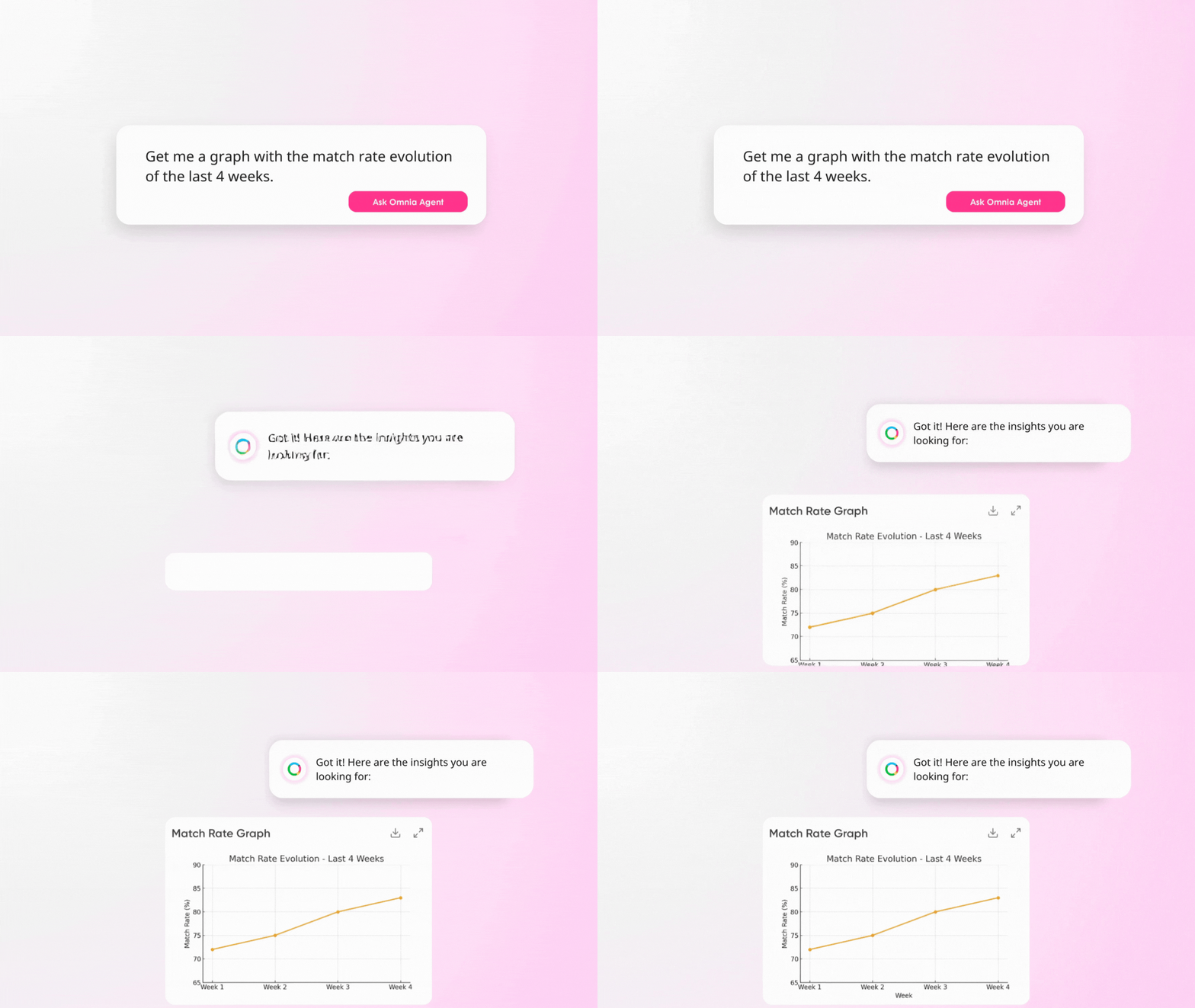
Omnia Retail leads this comparison because it combines transparent pricing automation, strong in-house competitor data, and a conversational agentic AI layer through Omnia Agent. Intelligence Node, Buynomics, Zilliant, and Wiser each have meaningful strengths, but differ significantly in their approach to AI workflows, scalability, and fit for retail versus B2B environments.
Why AI Pricing Software Has Become a Strategic Priority
Pricing decisions that once took weeks now need to happen in hours. Competitor promotions, stock fluctuations, marketplace dynamics, and shifting consumer demand all move faster than manual pricing processes can follow. Two structural pressures are driving adoption of AI pricing software across retail and enterprise contexts:
-
Price transparency at scale: Shoppers, procurement teams, and algorithms compare prices across dozens of sources simultaneously. Pricing gaps that go unaddressed affect visibility, conversion, and revenue faster than ever before.
-
The volume problem: Large assortments across multiple channels make manual pricing governance impossible at scale. AI pricing software provides the infrastructure to maintain strategic control without requiring a proportional increase in headcount or dashboard time.
As a result, evaluation criteria have shifted. Speed of price updates still matters, but buyers now also assess explainability, data ownership, AI depth, and how well a platform reduces the manual interpretation burden on the pricing team.
How the Best AI Pricing Software Compares
Below is a high-level comparison of Omnia Retail, Intelligence Node, Buynomics, Zilliant, and Wiser across the criteria that matter most when evaluating AI pricing software for retail, ecommerce, and enterprise use cases.
| Criterion | Omnia Retail | Intelligence Node | Buynomics | Zilliant | Wiser |
|---|---|---|---|---|---|
| Primary Use Case | Retail & D2C pricing intelligence and automation. | Real-time competitive price benchmarking at global scale. | Demand simulation and portfolio pricing optimisation. | B2B price optimisation and margin management. | Omnichannel retail intelligence and price monitoring. |
| AI Workflow | Agentic AI via Omnia Agent for conversational pricing analysis. | AI-driven product matching and pricing recommendations. | Virtual Consumer simulation for scenario modelling. | AI-driven price guidance and deal scoring for B2B sales. | Insight-led analytics; less agentic AI orientation. |
| Competitor Data | Strong in-house collection across channels and domains. | World's largest proprietary pricing dataset; 99% matching accuracy. | Incorporates competitor inputs within simulation models. | Less focused on real-time competitor data collection. | Strong competitive visibility across online and in-store channels. |
| Transparency | Transparent decision-tree logic; fully explainable. | Clear benchmarking data; recommendations visible in UI. | Scenario-based; impact of changes visible before execution. | Recommendation logic surfaced for sales team review. | Analytics-led; pricing logic less central than insight delivery. |
| Scalability | Enterprise-grade for large assortments and multi-channel retail. | Global scale; built for enterprise retailers and brands. | Scales well for complex portfolio and promotion modelling. | Enterprise B2B; strong for large sales organisations. | Strong for broad retail intelligence across channels. |
A Closer Look at the Best AI Pricing Software Options
1. Omnia Retail
Best for retailers and D2C brands that want agentic AI pricing with full transparency and control.
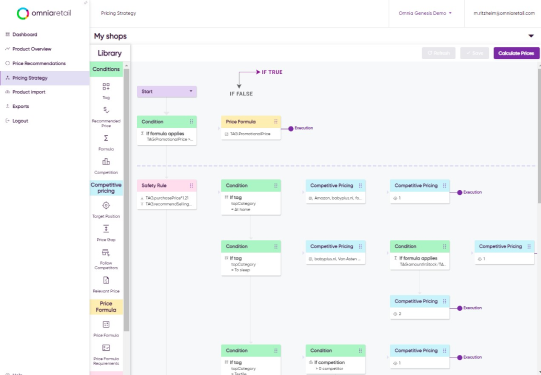
Omnia Retail is Europe's leading pricing intelligence platform, and in 2026 it stands out as the most complete AI pricing software for retail teams that need both automation depth and strategic clarity. The platform combines in-house competitor data collection, transparent rule-based pricing logic, and a conversational agentic AI layer through Omnia Agent.
Where most pricing tools still require users to navigate dashboards and manually connect data points, Omnia Agent changes the workflow entirely. Pricing teams can ask direct questions — "Which competitors have repriced in my top categories this week?", "Where am I overpriced relative to my margin targets?", "What changed and why?" — and receive structured, actionable answers. This positions Omnia less as a repricing engine and more as a pricing operating system that combines monitoring, automation, analytics, and AI analysis in one place.
- Pros:
- Agentic AI through Omnia Agent reduces manual dashboard work.
- Transparent, explainable pricing logic with full governance.
- Strong in-house competitor data collection across channels.
- Fast onboarding with measurable time to value.
- Built for enterprise retail and large product assortments.
- Cons:
- Most valuable for teams with defined pricing governance and strategic maturity.
- Primarily focused on European retail markets.
2. Intelligence Node
Best for enterprise retailers and global brands that need large-scale, high-accuracy competitive price benchmarking.
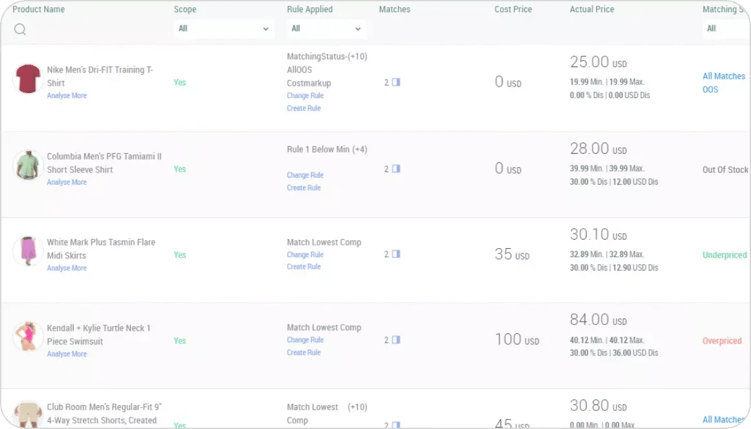
Intelligence Node is a real-time competitive price intelligence platform built around what it claims is the world's largest proprietary pricing dataset. With AI-driven product matching at up to 99% accuracy and coverage across more than 100 countries, it is particularly strong for enterprise retailers and global brands managing complex, multi-market pricing environments.
The platform covers competitor price monitoring, digital shelf analytics, assortment tracking, and MAP enforcement in a single interface. Its strength is data scale and accuracy rather than agentic AI workflows. Teams that need a reliable, high-volume feed of competitive market data as the foundation for their pricing decisions will find Intelligence Node a strong fit — particularly when operating across multiple geographies simultaneously.
- Pros:
- World-class competitive data coverage and matching accuracy.
- Global reach across 100+ countries and marketplaces.
- Strong digital shelf analytics alongside pricing intelligence.
- Trusted by major global brands including Unilever and Macy's.
- Cons:
- Less focused on agentic AI and conversational pricing workflows.
- Enterprise pricing; custom quotes typically start at $10,000+ annually.
3. Buynomics
Best for CPG companies and enterprise teams that need AI-driven demand simulation for pricing, promotion, and portfolio decisions.
Buynomics takes a fundamentally different approach to AI pricing optimization. Rather than tracking competitor prices and applying rules, it uses a Virtual Consumer simulation model that mimics real purchasing behaviour to predict how consumers will respond to price changes, promotional moves, and product portfolio adjustments — before any decision is executed.
This makes Buynomics particularly strong for consumer goods companies and manufacturers where pricing decisions interact with promotions, pack sizes, and distribution channel mix. The ability to model interconnected portfolio effects and cannibalization in a single simulation distinguishes it from more traditional pricing tools. It is less suited for retailers needing real-time competitive repricing, but highly relevant for strategic pricing decisions that require demand-side confidence before execution.
- Pros:
- Virtual Consumer simulation provides demand-side pricing confidence.
- Models portfolio, promotion, and pricing decisions together.
- Scenario planning with visible KPI impact before execution.
- Strong fit for CPG, FMCG, and complex portfolio environments.
- Cons:
- Less suited for real-time competitive repricing in retail.
- No API available; integration options are more limited.

4. Zilliant
Best for B2B companies that need AI-driven price guidance and margin management across complex sales workflows.
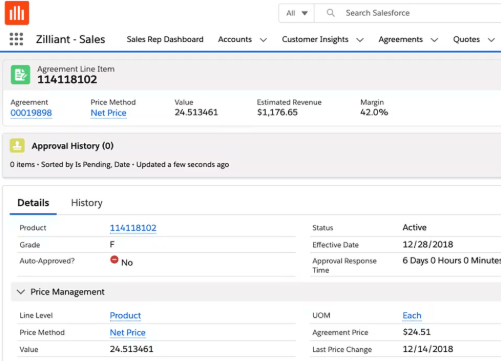
Zilliant is an enterprise AI pricing optimization software built primarily for B2B organizations — manufacturers, distributors, and service businesses where pricing is negotiated, segmented, and deeply embedded in the sales process. Its AI engine analyses transaction history, customer behaviour, and market inputs to generate price guidance and deal scoring that helps sales teams price more consistently and profitably.
For B2B pricing teams dealing with large customer bases, high SKU counts, and complex discount structures, Zilliant provides a level of analytical depth that generic tools cannot match. It integrates with major ERP and CRM systems including Salesforce, SAP, and Oracle, which makes adoption smoother in enterprise environments with established technology stacks. It is not designed for real-time retail competitor monitoring, but for companies whose primary pricing challenge is internal consistency and margin leakage across the sales force.
- Pros:
- Purpose-built for B2B pricing complexity and sales team workflows.
- AI-driven price guidance reduces margin leakage from inconsistent discounting.
- Strong ERP and CRM integrations including SAP, Salesforce, and Oracle.
- Deal scoring helps sales teams negotiate from a stronger position.
- Cons:
- Not designed for real-time retail competitor price tracking.
- Less relevant for D2C or ecommerce-first pricing environments.
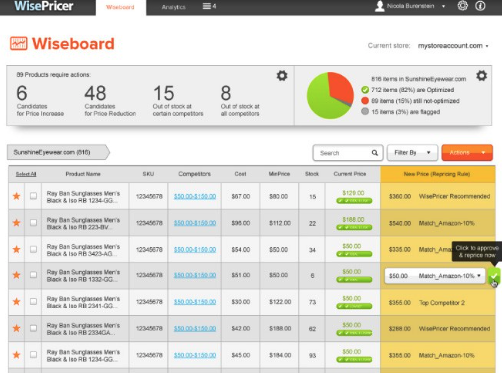
5. Wiser
Best for omnichannel retailers that need competitive intelligence across both digital and physical retail channels.
Wiser occupies a broader position than a pure AI pricing platform. Its value proposition is retail intelligence across channels: competitor price monitoring, promotion tracking, in-store shelf analytics, and consumer sentiment data in a unified view. This makes it particularly relevant for retailers whose challenge is not just "what price should I set?" but "what is happening across my entire competitive environment, online and offline?"
For teams managing omnichannel pricing strategies — where online price moves interact with in-store positioning and promotional calendars — Wiser provides the market context to make better-informed decisions. It is less focused on agentic AI workflows than Omnia, but remains a credible option for retailers that prioritise broad intelligence coverage over deep automation.
- Pros:
- Strong omnichannel coverage combining online and in-store intelligence.
- Promotion monitoring and consumer sentiment data alongside pricing.
- Good fit for retailers managing complex multi-channel environments.
- Cons:
- Pricing automation is less central than intelligence and analytics.
- Less agentic AI-oriented than newer platforms like Omnia.
What Separates the Best AI Pricing Software from the Rest
The platforms in this comparison each solve a different version of the pricing problem. Intelligence Node excels at data scale and competitive accuracy. Buynomics leads in demand simulation and portfolio modelling. Zilliant is the strongest option for B2B margin management. Wiser provides the broadest omnichannel intelligence picture. Omnia Retail brings these capabilities closest together for retail teams: competitor data, pricing automation, analytics, and agentic AI in a single workflow.
The clearest differentiator emerging in 2026 is not data coverage or automation speed — most established platforms perform adequately on both. It is the ability to reduce the manual interpretation burden on the pricing team. Platforms that help users move from market signal to commercial decision faster, without requiring them to dig through dashboards first, are pulling ahead. That is the shift Omnia Agent represents, and it is why agentic AI has become one of the most important criteria when evaluating the best AI pricing software today.
Best AI Pricing Software: Final Verdict
For retail and D2C teams looking for the best AI pricing software in 2026, Omnia Retail stands out because it combines the fundamentals — data quality, transparent logic, fast onboarding — with an agentic AI layer that meaningfully changes how pricing teams work day to day. Intelligence Node is the right choice when global data scale and accuracy are the primary requirement. Buynomics serves CPG and FMCG teams best. Zilliant leads in B2B pricing governance. Wiser is strongest when omnichannel market intelligence is the core need.
The best platform is ultimately the one that matches your pricing maturity, team structure, and commercial context. What has changed in 2026 is that the evaluation should now include not just what data a platform provides, but how much of the analytical work it does for you.
FAQs: Best AI Pricing Software
1) What is the best AI pricing software for retailers in 2026?
For most retail and D2C teams, Omnia Retail is the strongest choice in 2026. It combines real-time competitor data, transparent pricing automation, and agentic AI through Omnia Agent — giving pricing teams both execution capability and the analytical support to make faster, more confident decisions.
2) How is agentic AI different from standard pricing automation?
Standard pricing automation applies predefined rules to update prices. Agentic AI goes further: it runs analysis autonomously, surfaces answers to direct questions, and helps teams interpret market changes without requiring manual dashboard work. Omnia Agent is one of the clearest examples of this in the retail pricing category.
3) Which AI pricing software is best for B2B companies?
Zilliant is the strongest choice for B2B pricing environments. It is purpose-built for manufacturers, distributors, and service businesses that need AI-driven price guidance, deal scoring, and margin management across large customer bases and complex discount structures.
4) What is Buynomics and when should you use it?
Buynomics uses a Virtual Consumer simulation model to predict how customers respond to pricing, promotion, and portfolio changes before decisions are executed. It is best suited for CPG, FMCG, and enterprise teams where pricing decisions intersect with promotions and product portfolio strategy — rather than real-time competitive repricing.
5) What makes Intelligence Node different from other pricing intelligence tools?
Intelligence Node differentiates on data scale and accuracy. It claims the world's largest proprietary pricing dataset with up to 99% product matching accuracy across 100+ countries. This makes it especially relevant for global enterprise retailers and brands that need reliable competitive benchmarking at very high volume and geographic spread.
6) Is AI pricing software only relevant for large enterprises?
No. While platforms like Intelligence Node and Zilliant are clearly enterprise-oriented, the category covers a wide range of team sizes and complexity levels. The most important factor is matching the platform to your pricing maturity, assortment size, and the specific commercial challenge you are trying to solve.
7) What data inputs should the best AI pricing software use?
The best AI pricing software draws on competitor prices, internal cost and margin data, stock levels, promotions, demand signals, and category performance. Platforms that combine external market inputs with internal business logic are better positioned to support decisions that protect both competitiveness and margin simultaneously.
8) Why does pricing transparency matter in AI software?
Pricing teams need to trust the decisions their software makes. Transparency means being able to see why a price moved, which rule or model drove that change, and whether it aligns with the commercial strategy. Platforms that operate as black boxes create governance risk and reduce the team's ability to learn from pricing outcomes over time.
9) How quickly can AI pricing software deliver ROI?
Time to value varies by platform and use case. Omnia Retail is known for relatively fast onboarding and measurable ROI within the first term for retail teams with defined pricing governance. More complex platforms — particularly those requiring deep ERP integration or demand modelling setup — typically have longer deployment cycles before full value is realised.
10) What is the future of AI pricing software?
The direction is clear: pricing software is moving from passive data delivery toward active, agentic decision support. The platforms that will lead the next few years are those that reduce the manual interpretation burden on pricing teams — combining automation, real-time data, and conversational AI to help teams move from market signal to commercial decision faster and with more confidence.