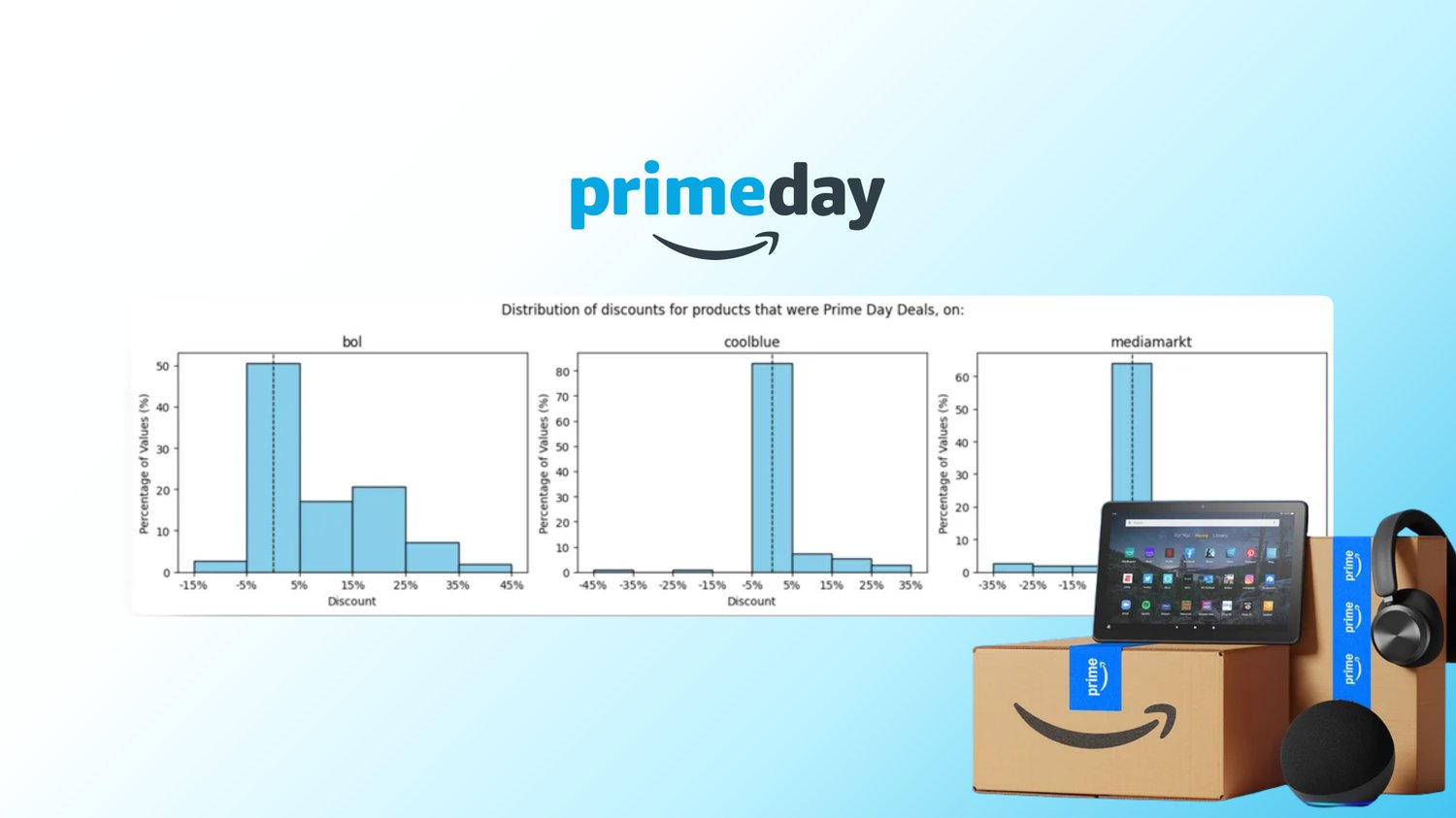
45.5% of products actually increased in price during Prime Day 2025. That’s not a typo—nearly half of all “discounted” items cost more during Amazon’s biggest sales event than they did before it started.
This finding from Omnia’s deep dive into Prime Day 2025 data reveals the sophisticated pricing game that European retailers need to understand as they prepare for Amazon Prime Day 2026. With Amazon shifting the event to an earlier date and extending promotional periods, the stakes have never been higher for category and pricing managers.
When is Prime Day 2026? Will Shifting Event Dates Impact Retailers?
When is Prime Day 2026? Amazon has moved the event to late June, abandoning the traditional July timeframe that retailers have planned around for years. This isn’t just a calendar adjustment—it’s a strategic restructuring that forces every retailer to rethink their operational timeline.
The shift creates a domino effect across the entire e-commerce calendar. Amazon Spring Deal Days are now scheduled for March 10-14, 2026, while Prime Big Deal Days will likely occur in early October 2026. This three-pronged approach spreads promotional pressure across the year, making it harder for competitors to counter-program effectively.
For European retailers, this timing shift means inventory planning must accelerate by weeks. Supply chains that traditionally ramped up for July peak demand now need to reach capacity in late June. Marketing budgets require reallocation, and staffing plans need fundamental revision.
 Source: Amazon
Amazon Prime Day 2026 Dates and Their Strategic Implications
Amazon Prime Day 2026 dates will force retailers to accelerate their preparation timelines significantly. The earlier timing creates several operational challenges that smart retailers are already addressing.
Inventory Acceleration: Suppliers must complete production cycles weeks earlier than traditional planning cycles. This particularly affects European retailers sourcing from Asia, where shipping timelines become critical constraints.
Competitive Window Compression: The gap between Amazon’s spring event and Prime Day shrinks, reducing the time available for competitive analysis and strategy adjustment. Retailers have less breathing room to analyze spring performance and optimize for summer.
Consumer Behavior Shifts: Earlier Prime Day timing may capture different consumer spending patterns. Late June coincides with summer vacation planning and back-to-school preparation, potentially changing which product categories see the highest demand.
Key Insights From Prime Day 2025 Pricing: What the Data Says
Omnia’s analysis of Prime Day 2025 uncovered pricing patterns that every retailer should understand before Amazon Prime Day 2026 begins.
-
The Pre-Event Price Hike: Amazon systematically raised prices before Prime Day 2025, with average prices climbing from €142.78 to €148.28 in the weeks leading up to the event. During the sale, prices dropped to €145.50—still higher than the pre-hike baseline—before settling at €142.77 post-event.
This pattern reveals Amazon’s sophisticated approach to creating the illusion of deep discounts while maintaining healthy margins. Only 14.8% of products experienced price increases greater than 5%, but the psychological impact of “sale” pricing remained powerful. -
Regional Pricing Variations: European markets saw different pricing strategies based on local competitive dynamics. Amazon applied more aggressive discounting in markets with strong local competitors like bol.com in the Netherlands and MediaMarkt across Germany.
-
Hero Product vs. Long-Tail Strategy: Amazon used deep discounts on high-visibility “hero products” to drive traffic while maintaining margins on long-tail items. This approach maximized both customer acquisition and profitability.
How European Competitors Responded in 2025
-png.png?width=987&height=444&name=LinkedIn%20Visuals%20-%20Sander%20(8)-png.png)
The competitive response to Prime Day 2025 offers valuable insights for retailers preparing their Amazon Prime Day 2026 deals strategy.
-
bol.com’s Aggressive Counter-Programming: The Dutch retailer matched or beat Amazon’s prices on 14% of tracked products, often offering deeper discounts than Amazon’s advertised deals. This aggressive stance helped bol.com maintain market share during Amazon’s promotional period.
-
MediaMarkt’s Category Focus: The electronics retailer concentrated on specific categories where it could offer superior value, particularly in gaming and home appliances. Rather than matching Amazon across all categories, they chose strategic battles.
-
Coolblue’s Service Differentiation: Instead of pure price competition, Coolblue emphasized faster delivery and superior customer service, positioning itself as the premium alternative during the promotional period.
These responses demonstrate that successful competition with Amazon requires strategic focus rather than broad-based price matching. Retailers with limited resources should identify specific categories or customer segments where they can offer superior value.
The Pre-Prime Day Price Hike in 2025: An Omnia-Exclusive Analysis
While Amazon's advertised discounts projected substantial savings, proprietary data from the data team at Omnia Retail shows an interesting pre-event pricing dynamic that offers deeper insight into the actual depth of these deals. Our analysis of average price trends leading up to Prime Day 2025 (based on a 3-day rolling average) illustrates a distinct pattern:
.png?width=789&height=444&name=LinkedIn%20Visuals%20-%20Sander%20(5).png)
A closer examination of the price trajectory indicates an increase in the average price of products in the weeks preceding Prime Day. Our data shows:
- Average prices climbed from €142.78 in the previous month to €148.28 two to three weeks before Prime Day. Despite a slight decrease to €145.50 in the week immediately before the event, the average price during Prime Day itself settled at €142.77. This suggests that for many products, the Prime Day discount effectively reverted the price to a level observed a month earlier, rather than offering significant savings.
Further granular analysis of percentage changes reinforces this perspective:
- We recorded an average price hike of 0.98% from the previous month to 2-3 weeks before Prime Day, followed by another 0.97% hike from 2-3 weeks before to the week preceding the event.
- More tellingly, 14.8% of products experienced a price increase exceeding 5% in the 2-3 weeks leading up to the week before Prime Day, with 7.1% seeing hikes greater than 10% in the same period.
- Perhaps the most compelling finding for pricing teams is that 54.9% of products showed no price drop (and some even increased in price) in the week leading up to and during Prime Day. In fact, 45.5% of products actually saw a price increase from the week before to during Prime Day. Only a minor fraction, 0.6%, experienced a price reduction of more than 20% from the week before to Prime Day, and merely 2.6% saw drops exceeding 10%.
Optimize your pricing strategies on Amazon and other marketplaces
.png)
This data suggests that for a substantial segment of products, the "Prime Day deals" did not always represent significant discounts from the immediate pre-event price. Instead, a considerable number of items either saw their prices return to previously observed levels or experienced only marginal reductions from a recently adjusted base. This sophisticated pricing strategy allows Amazon to promote compelling discounts while diligently managing overall profitability.
Preparing for Amazon Prime Day 2026 Deals: Strategic Recommendations
Based on 2025 performance data, retailers should focus on four key areas when preparing for Amazon Prime Day 2026.
-
Dynamic Pricing Implementation: The rapid price changes during Prime Day 2025 highlight the need for real-time pricing capabilities. Retailers using manual pricing processes found themselves consistently behind Amazon’s adjustments. Dynamic pricing software becomes essential for maintaining competitive positioning during high-velocity promotional periods.
-
Competitive Intelligence Systems: Amazon’s pre-event price manipulation strategy requires retailers to track competitor pricing over extended periods, not just during the event itself. Understanding baseline pricing patterns helps identify genuine opportunities versus manufactured discounts.
-
Inventory Optimization: With the earlier timing, inventory planning becomes more critical. Retailers should analyze 2025 demand patterns to predict which categories will see the highest velocity during the compressed timeline.
-
Customer Segmentation: Amazon’s success with targeted promotions suggests that broad-based discounting is less effective than precise customer targeting. Retailers should develop segmentation strategies that identify their most valuable customers and tailor promotions accordingly.
Regulatory Considerations: The EU Omnibus Directive Challenge
European retailers face additional complexity due to the EU Omnibus Directive, which requires displaying the lowest price from the previous 30 days alongside promotional pricing.
Amazon’s use of manufacturers’ RRP instead of actual lowest prices potentially conflicts with these requirements. A Munich court ruling highlighted the risk of non-compliance, including potential fines. This creates an opportunity for compliant retailers to differentiate themselves through transparent pricing practices.
Retailers should implement systems that automatically track and display 30-day lowest prices, ensuring full compliance while highlighting Amazon’s potential regulatory gaps. This transparency can become a competitive advantage, particularly with price-conscious European consumers.
At Omnia Retail, we anticipated these enforcement trends. Our Dynamic Pricing suite now incorporates a "30-Day Lowest Price" dashboard, which displays the lowest price reached per SKU in the past month alongside current and planned promotions. This functionality empowers teams to:
- Simulate upcoming campaign tags (e.g., "-15%") with a single click to confirm the legality of the promotional claim.
- Schedule automated 30-day price checks before promotions go live, identifying any last-minute shifts in the baseline price.
- Export comprehensive audit trails for compliance teams and in preparation for consumer-authority spot checks.
Maintaining transparent pricing is not only crucial for building consumer trust but also for safeguarding margins against potentially significant and avoidable regulatory fines.
Wrapping Up: Amazon Prime Day 2026 Success Strategies
Amazon Prime Day 2026 represents both challenge and opportunity for European retailers. The earlier timing and extended promotional calendar require fundamental changes to operational planning, but they also create new opportunities for strategic differentiation.
Successful retailers will combine dynamic pricing capabilities with deep competitive intelligence, regulatory compliance, and sustainable operational practices. The goal isn’t to match Amazon’s every move but to identify specific areas where superior value can be delivered to target customers.
The retailers who start preparing now—adjusting inventory timelines, implementing pricing technology, and developing targeted promotional strategies—will be best positioned to capture market share during Amazon Prime Day 2026. Those who wait until the traditional July preparation timeline will find themselves consistently behind the curve.
The data from 2025 provides a roadmap, but success in 2026 requires adapting these insights to the new competitive reality that Amazon’s calendar restructuring has created.
Make your pricing smarter with Omnia Retail
Read more about interesting pricing strategies here:
- What our the best pricing strategies?: Read about 17 pricing strategies for you as a retailer or brand.
- What is Price Monitoring?: Check out everything you need to know about price comparison and price monitoring.
- What is Value-Based Pricing?: A full overview of how price and consumer perception work together.
- What is Charm Pricing?: A short introduction to a fun pricing method.
- What is Penetration Pricing?: A guide on how to get noticed when first entering a new market.
- What is Bundle Pricing?: Learn more about the benefits of a bundle pricing strategy.
- What is Cost Plus Pricing?: In this article, we’ll cover cost-plus pricing and show you when it makes sense to use this strategy.
- What is Price Skimming?: Learn how price skimming can help you facilitate a higher return on early investments.
- What is MAP Pricing?: Find out why MAP (minimum advertised price) pricing is so important to many retailers.